
Last updated October 15, 2026
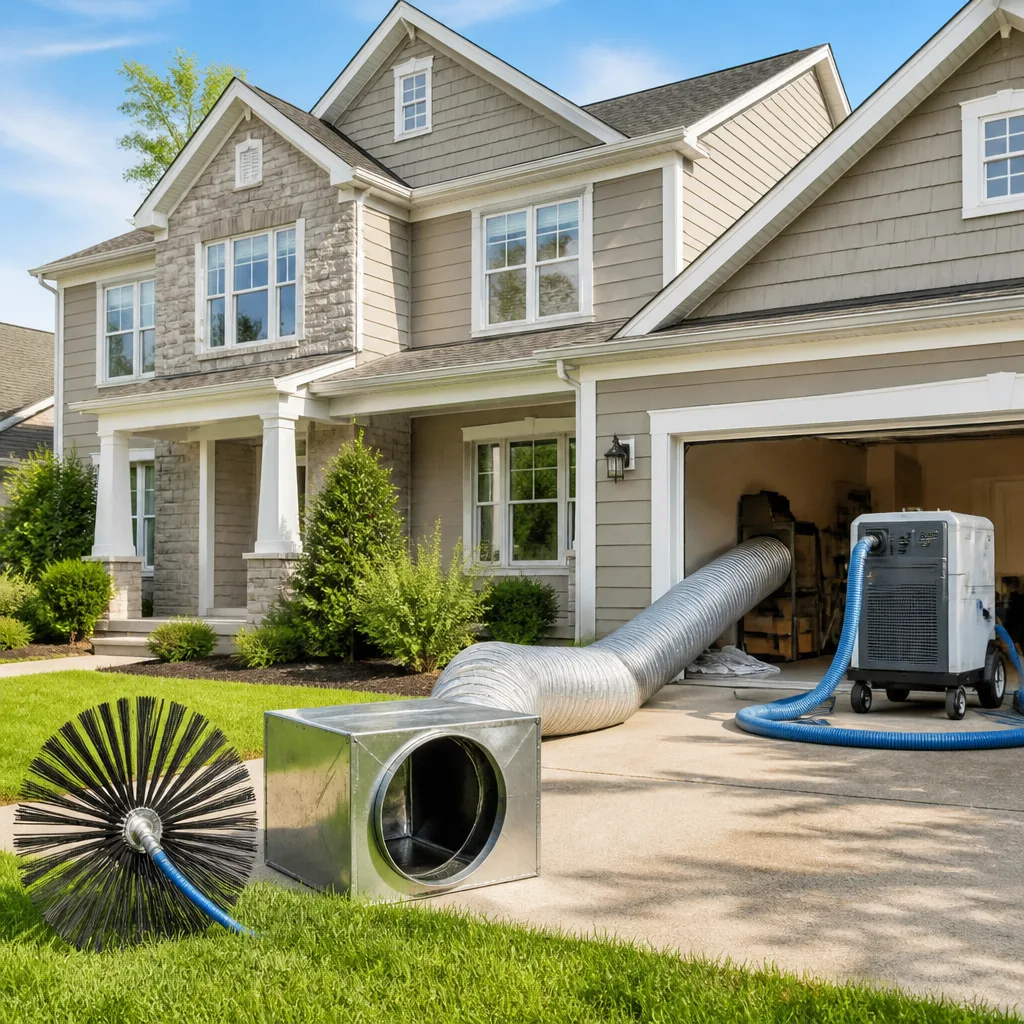 Whole-home duct cleaning
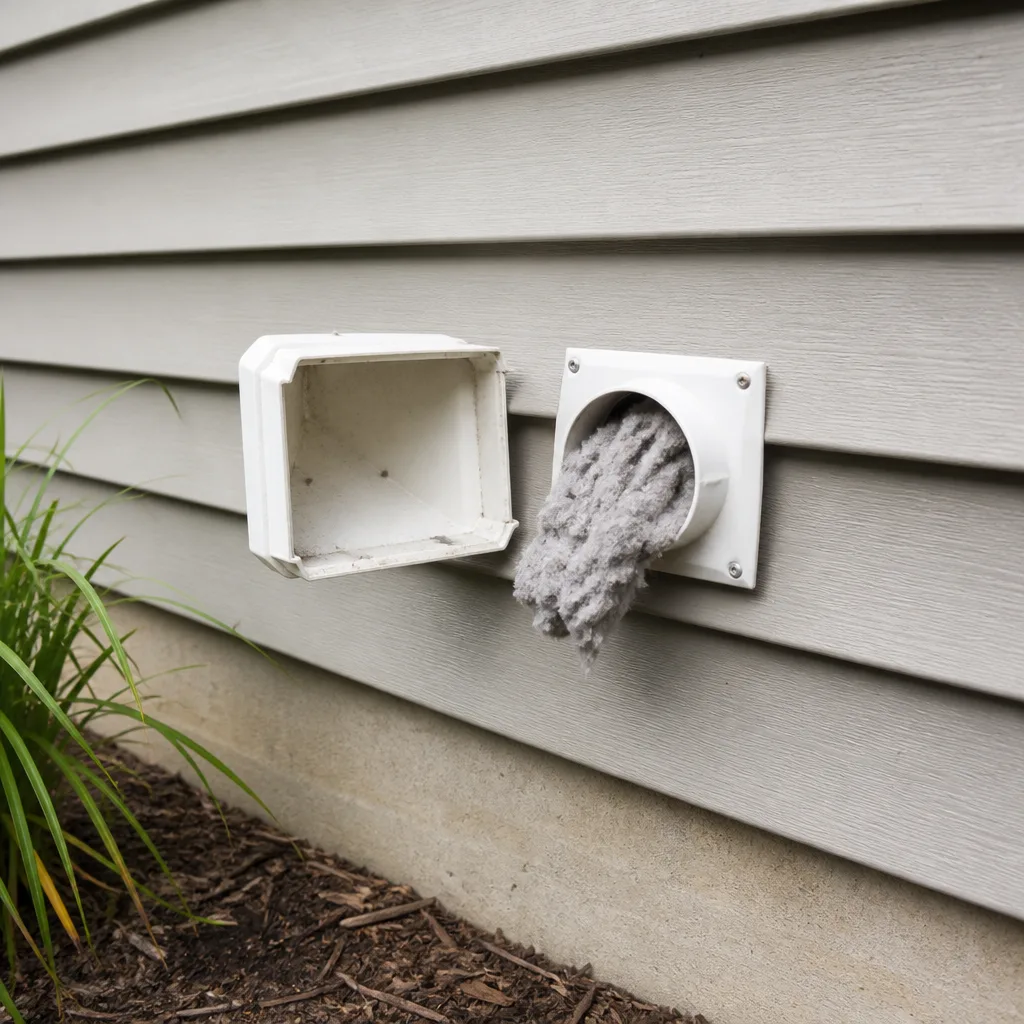 Dryer vent cleaning
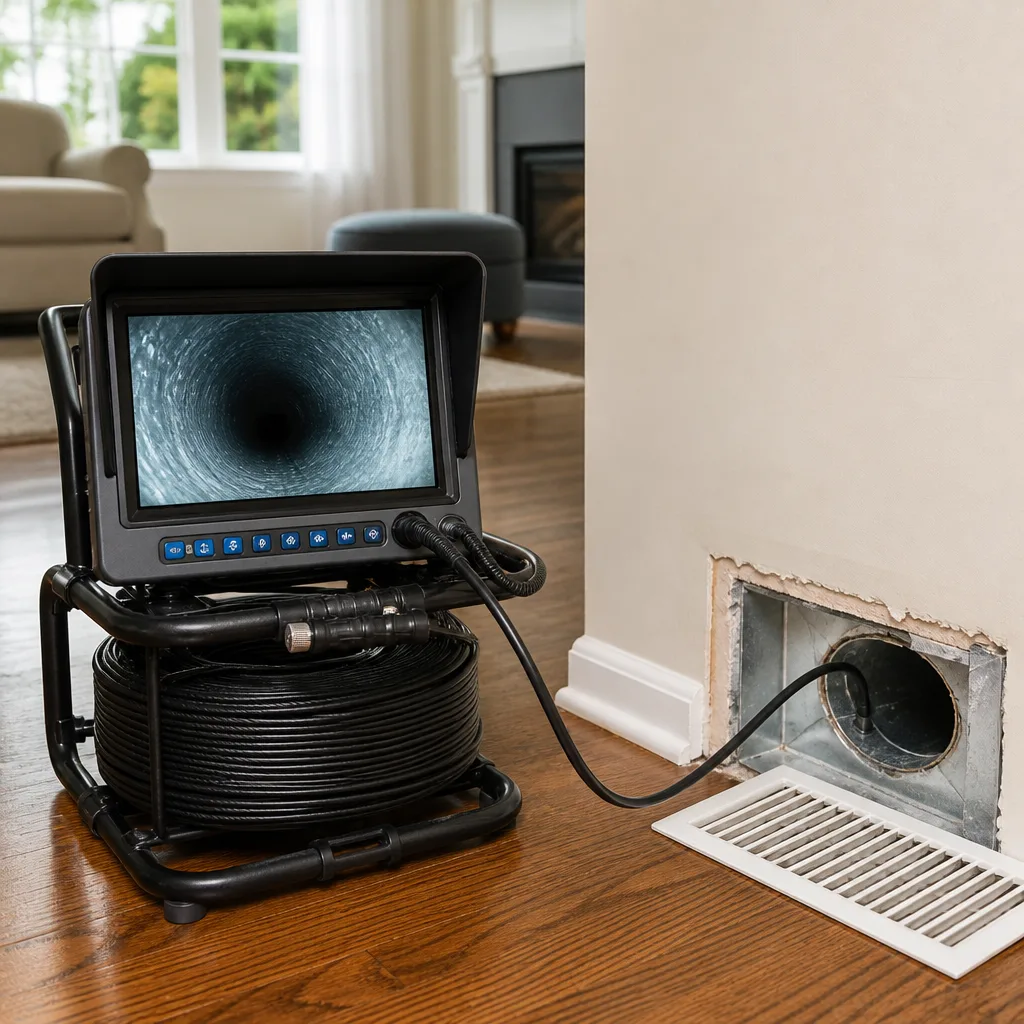 Camera inspection
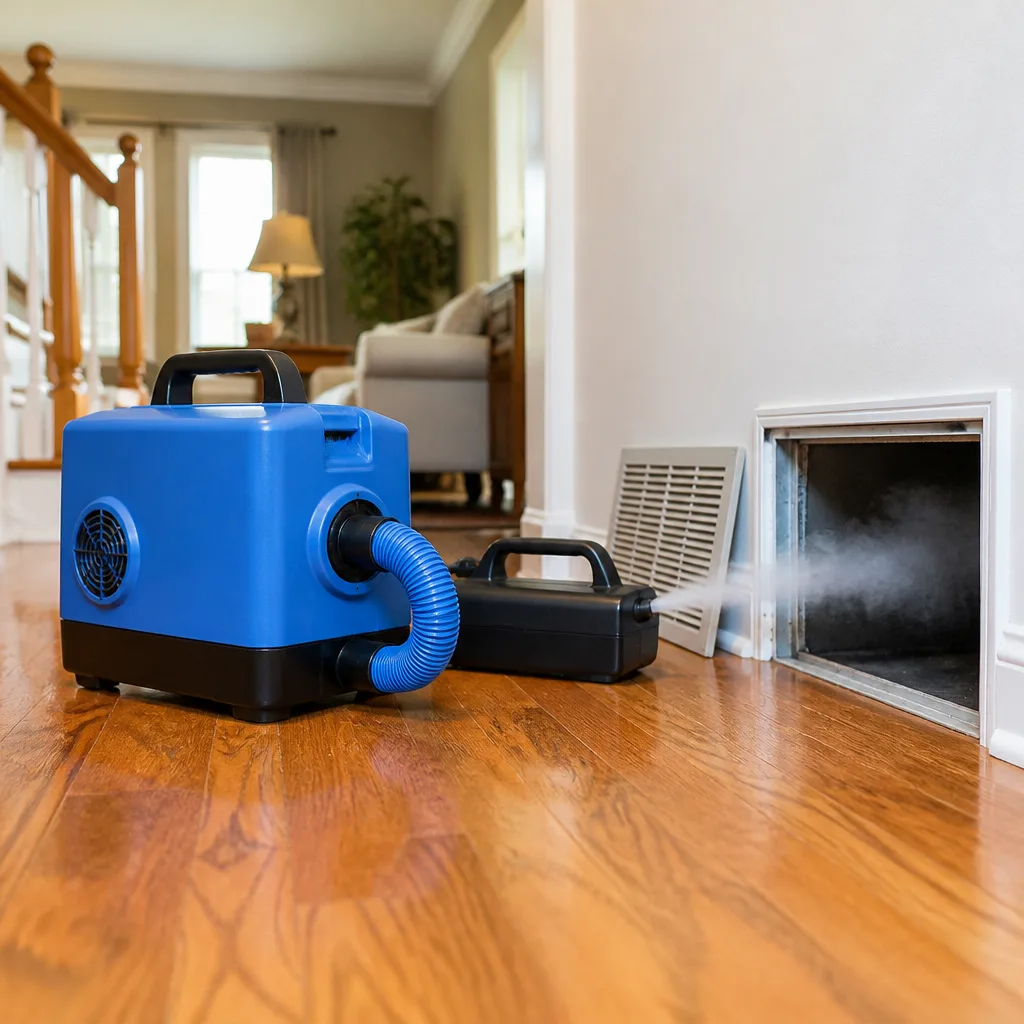 Sanitizing & deodorizing
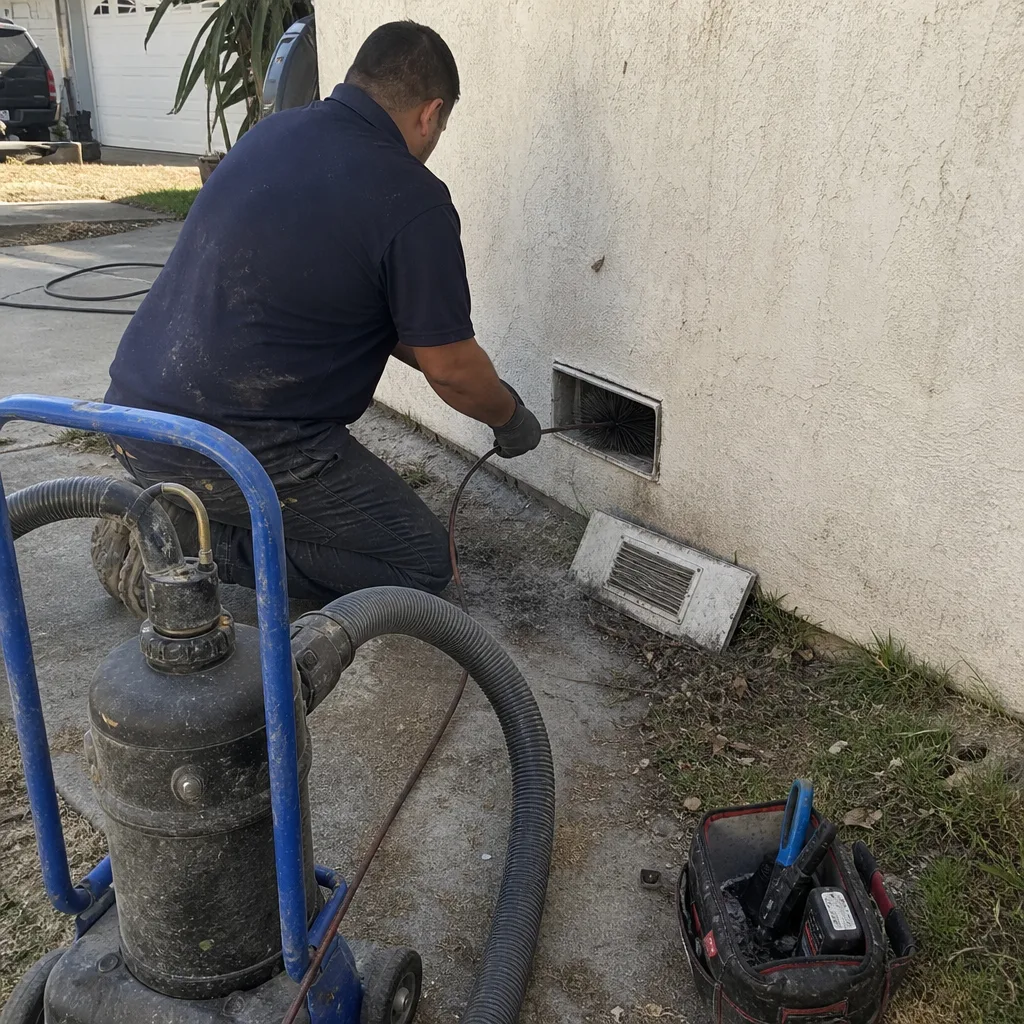
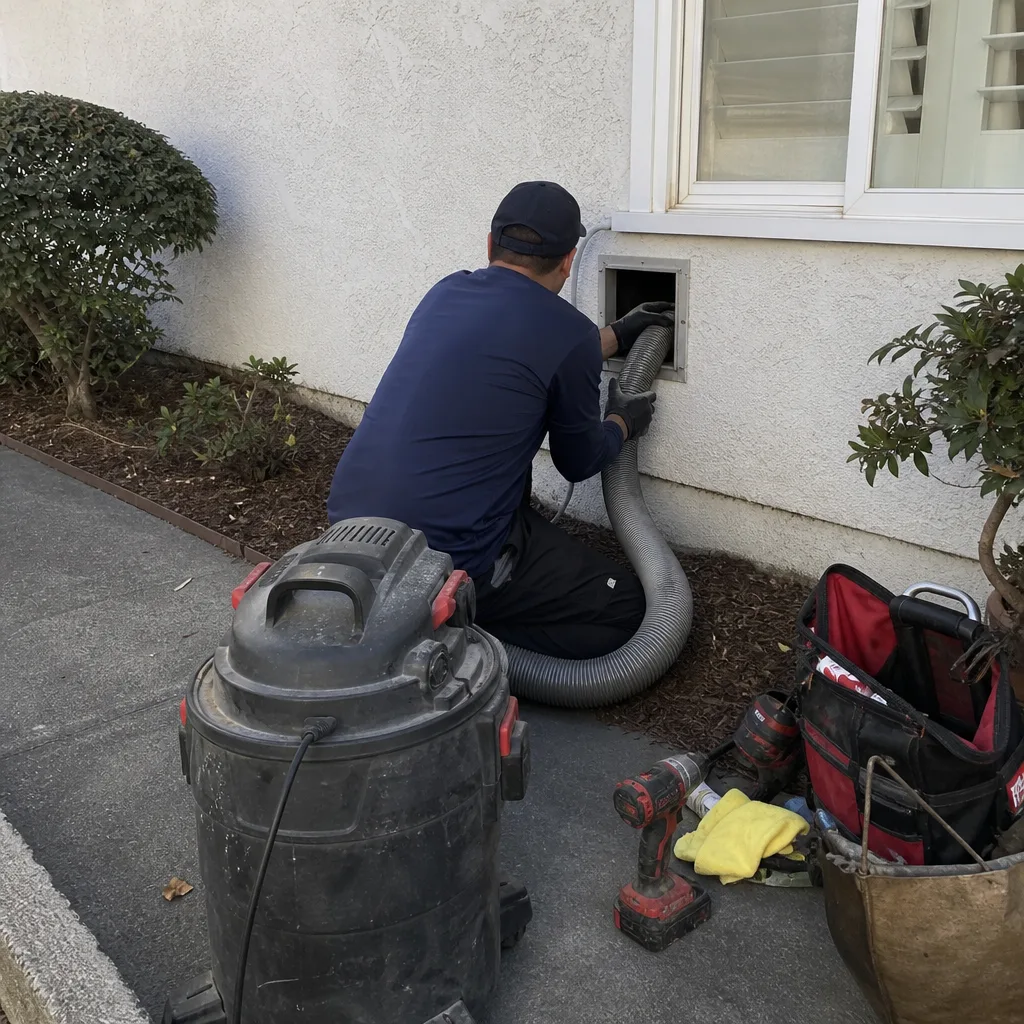
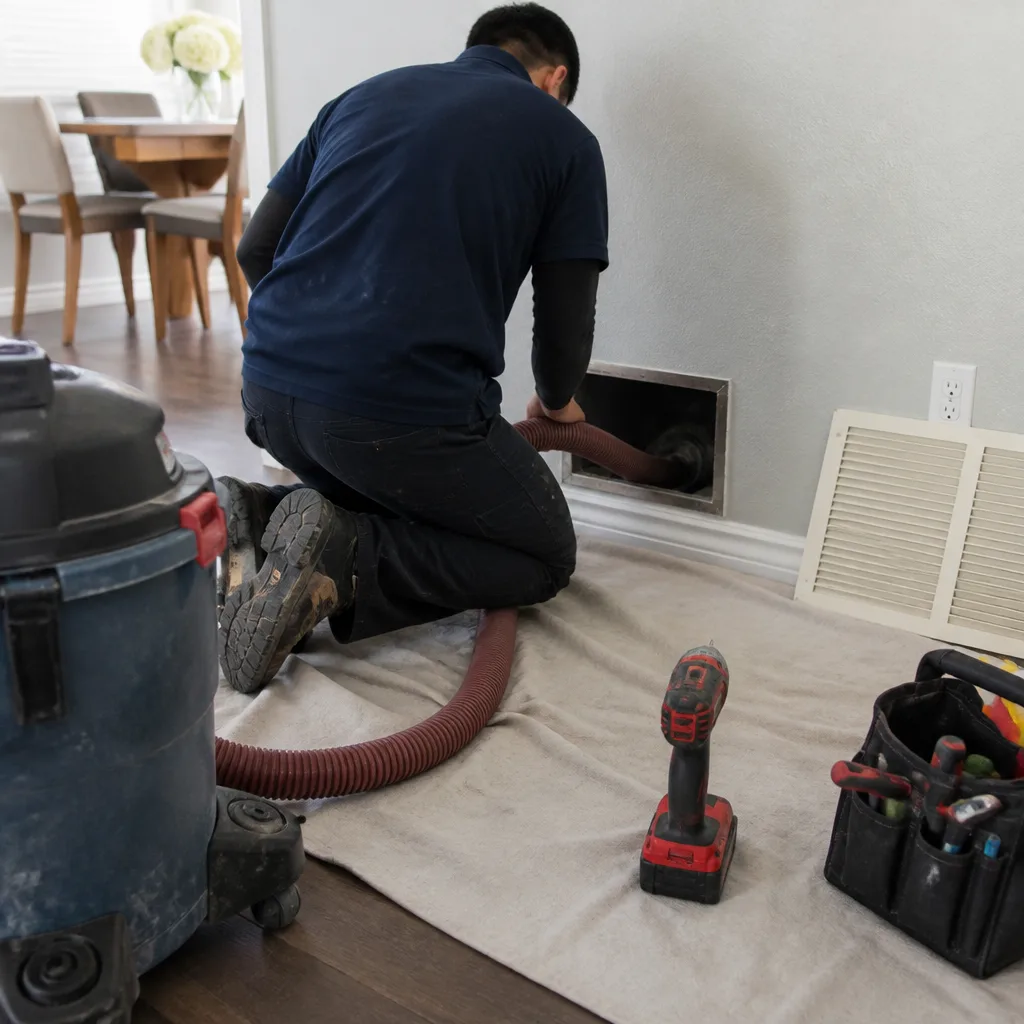
Whole-system duct and dryer vent check with before-and-after photos - you see exactly what came out of your vents
That "$99 whole-house special" is a bait ad - the real number appears once they are in your hallway, or the "clean" is a shop-vac at the register. We photograph the inside of your ducts before and after instead.
The Complete Guide to Air Duct Cleaning in Torrance
Most Torrance homeowners who Google “air duct cleaning” land on guides written for Phoenix or Dallas, cities with zero marine influence and totally different duct layouts. Those guides never mention the salt-laced humidity that rolls in off Santa Monica Bay every June, or the way 1960s tract-home duct chases in Torrance were wrapped in stucco and left to sweat. Here’s what those guides miss about your zip code, and what our Air Duct Cleaning services actually look like from access panel to final invoice.
Quick Answer
Air duct cleaning in Torrance typically costs $350 to $650 for a standard single-family home, and a proper NADCA-standard job takes 3 to 5 hours. The unique challenge in Torrance isn’t just dust, it’s the marine layer humidity that turns ordinary dust inside flex duct into a damp, sticky film that dry-climate homes never deal with. A professional cleaning should include negative-pressure extraction, brush agitation of every accessible duct run, and before-and-after photo documentation of the interior of your ducts. For a deeper comparison of approaches, see our DIY vs Professional Air Duct Cleaning: The Torrance Homeowner’s Decision Guide.
Styles & brands we work with
Table of Contents
- Why Torrance Ducts Get Dirtier Than Inland Cities
- The Three Duct Types in Torrance Tract Homes (and How Cleaning Differs)
- What the NADCA ACR Standard Actually Requires
- Equipment Reality Check: Rotobrush, Nikro, and Negative-Air Explained
- How Much Does Air Duct Cleaning Cost in Torrance?
- Step-by-Step: What a Proper Duct Cleaning Looks Like
- The Relay Visibility Guarantee Applied to Torrance Ducts
- Common Mistakes to Avoid
- When to Call a Professional
- Frequently Asked Questions
Why Torrance Ducts Get Dirtier Than Inland Cities
Torrance sits in a narrow band of coastal climate that behaves nothing like Riverside or San Bernardino. The marine layer that settles over the South Bay from late spring through early fall, the same June Gloom that keeps morning temperatures in the 60s, carries fine salt aerosol and sustained humidity levels that hover between 65% and 80% overnight. That moisture finds its way into your duct system through the return air plenum, and once inside, it interacts with the dust your household generates every day.
Here’s what that means in practical terms. Dry dust in a Phoenix duct system stays loose and blows through. In Torrance, that same dust absorbs moisture from the marine air and turns into a paste that adheres to duct walls, especially on the interior lining of flex duct. Once adhered, it traps pollen, pet dander, and the fine particulate matter that drifts over from the 405 and the refineries in Wilmington. Left alone, that organic film becomes a food source for dust mites and, in the dampest duct runs, mold spores that colonize the insulation layer inside flex duct.
We have opened ducts in Torrance homes in Old Torrance, Seaside, and Walteria that had a gray-green film coating the entire inner circumference of the flex runs, while the supply registers looked almost clean from the outside. That is the insidious part: a register can look fine while the duct itself is fouled. In our experience, homes within two miles of the coast show this pattern earlier and more aggressively than homes east of Crenshaw Boulevard, where the marine influence weakens.
The second Torrance-specific factor is the age of the housing stock. A large portion of single-family homes in Torrance were built between 1955 and 1975. These tract homes were originally constructed with galvanized sheet metal ducting, which is durable but has been through decades of thermal cycling. Every seam, every unsealed joint, every gap where the duct meets the register boot creates a suction point that pulls attic air, insulation fibers, and dust into the system. Homes in neighborhoods like New Horizons and North Torrance, where original ductwork is common and attics are ventilated with passive eave vents, see a steady infiltration of fine particulate that never appears in a sealed modern system.
The Three Duct Types in Torrance Tract Homes (and How Cleaning Differs)
Not all ducts respond to cleaning the same way. The material your ducts are made from determines which tools are appropriate, how aggressive the agitation can be, and what the finished result should look like. Before any cleaning starts on a Torrance home, we identify the duct type because the wrong approach on the wrong material can shred a flex duct liner or wash out the internal insulation of fiberboard.
Galvanized Sheet Metal (1960s to 1970s tract homes)
These are the original ducts in most Torrance homes built before 1978, the classic rectangular trunk lines with round branch runs you will find in houses throughout the Tract 5000 series and similar developments. Sheet metal is the most forgiving material to clean. It can handle rotary brush agitation at full speed, and the smooth metal surface releases accumulated debris well when you combine brushing with negative-pressure airflow. What we often find in these older Torrance systems is fine gray dust that has been baking onto the metal for decades, plus rust scale where marine air has condensed inside the duct overnight. Sheet metal ducts also develop leaky seams over time, which means the cleaning process should include a visual scan for gaps that are pulling attic air into the system.
Flexible Plastic-and-Wire Duct (1980s to 1990s additions and replacements)
Flex duct is a plastic inner liner wrapped around a spiral wire coil with an insulation jacket on the outside. It became standard in Torrance remodels and HVAC system replacements from about 1985 onward, and it is now the most common duct type in the city. Flex duct needs a gentler touch. Aggressive rotary brushing can tear the inner liner, and once that liner is compromised, the duct pulls insulation fibers directly into your air stream. Cleaning flex duct requires a combination of moderate brush agitation, compressed-air dislodging, and sustained negative pressure to carry loosened material out. The interior of flex duct is porous and textured, which is exactly why it holds onto that humid, salt-laden dust film we described above, and why Torrance flex duct needs more frequent attention than flex duct in dry inland cities.
Fiberboard Duct Board (post-2000 custom homes and some commercial conversions)
Duct board is rigid fiberglass insulation pressed into duct sections, common in newer custom homes in South Torrance and in some of the condo conversions along Hawthorne Boulevard. Cleaning duct board is the most specialized process because you cannot allow moisture to sit inside the material. The interior surface of duct board is soft and easily damaged. The NADCA standard requires that duct board be cleaned with soft-bristle agitation and HEPA-filtered negative air, never with water or chemical sprays, and never with the aggressive brushes you would use on sheet metal. If you have duct board and a technician shows up with a truck-mounted vacuum and a standard whip brush, stop the job and call someone else.
If you need the broader picture of how this fits with your whole system, our Air Duct Cleaning in Torrance page covers the service in full.
What the NADCA ACR Standard Actually Requires
NADCA is the National Air Duct Cleaners Association, and its ACR standard, the Assessment, Cleaning, and Restoration of HVAC Systems, is the closest thing this industry has to a rulebook. When a contractor says they are NADCA-certified, that means they have agreed to follow this standard. But saying it and doing it are different things, and Torrance homeowners have every right to know what the standard actually demands on a job site.
The ACR standard breaks a proper cleaning into three phases: assessment, cleaning, and restoration. Here is what each one requires in plain terms.
- Assessment: Before any cleaning begins, the contractor inspects the system. This means opening an access panel or pulling a register to look inside, identifying the duct material, checking for moisture, mold, or pest activity, and documenting the condition before work starts. If a company gives you a price over the phone without ever seeing your system, they are not following the standard.
- Cleaning: The standard requires source removal, which means the debris is physically dislodged from duct surfaces and extracted from the system. Negative-air machines are connected to the ductwork to create vacuum pressure, and agitation devices, brushes, compressed air, or soft-bristle tools, loosen the debris so the vacuum pulls it out. The standard explicitly prohibits using the home’s own blower fan as the only air movement; there must be an external collection device.
- Restoration: After cleaning, the contractor must restore the system to working order. That includes replacing access panels, checking that registers are sealed, verifying that filters are clean or replacing them, and confirming the system runs without leaks introduced during cleaning. The standard also requires that any damaged duct sections identified during cleaning be documented for the homeowner.
How do you verify a contractor is following this and not just claiming it? Ask three questions. First, ask what collection equipment they use, the answer should include a HEPA-filtered negative-air machine with a brand name behind it, not a shop vac. Second, ask if they will open an access panel before quoting. Third, ask if you get photo documentation of the interior of the ducts after cleaning. A contractor who cannot answer all three clearly is not performing NADCA-standard work, no matter what their website says.
Equipment Reality Check: Rotobrush, Nikro, and Negative-Air Explained
The equipment a duct cleaning company runs tells you more than any marketing pitch. There are two broad categories of tools in this trade: agitation devices that loosen debris, and collection devices that pull debris out of the system. Both are required. A truck-mounted vacuum alone cannot remove the film that adheres to duct walls, and a brush alone will simply stir dust into your living space. Here is what professional-grade equipment actually does at each stage, using the brands we run at Cardinal Air Duct Torrance home.
A Rotobrush system is a rotary brush that spins inside the duct, scrubbing the interior surface to break loose the adhered dust film and particulate buildup. Think of it as the difference between rinsing a dirty glass and actually scrubbing it with a brush. The rotating bristles reach into the texture of flex duct and the corners of rectangular metal duct in a way that air alone cannot. On sheet metal, the brush runs at full speed and restores the metal to a visibly clean surface. On flex duct, the brush speed is moderated to avoid liner damage.
A Nikro negative-air machine is the collection side of the equation. It connects to the duct system and creates a vacuum, meaning the machine pulls air out of the ducts continuously while the brush works. This is negative-pressure extraction, meaning the loosened debris goes straight into the vacuum, not back into your living room. The air passing through the machine is filtered through HEPA media before it is exhausted, so the fine particulate that would otherwise blow into your home is trapped. On a Torrance job, the Nikro unit runs continuously from the first agitation pass to the final walkthrough, keeping the entire duct system under negative pressure so nothing escapes into the house.
On larger systems and in homes where visible mold growth is suspected in ducts, an Abatement Technologies containment unit is used to create a sealed work zone and HEPA-filter the air inside the living space during the job. This is more common in older Torrance homes with extensive sheet metal runs or in properties where the furnace closet sits inside the living envelope rather than in a garage.
This equipment pairing matters because it is the difference between a cleaning that removes debris from your system and a cleaning that simply relocates debris from your ducts to your couch. A company that arrives with a truck-mounted vacuum and a single whip line, but no rotary brush and no HEPA filtration, is doing surface work, not source removal.
How Much Does Air Duct Cleaning Cost in Torrance?
Let’s be direct about the number. Most standard air duct cleanings for a Torrance single-family home run between $350 and $650, depending on the size of the home, the number of duct runs, the duct material, and the level of contamination. A small two-bedroom with accessible sheet metal ducts will land at the lower end. A four-bedroom with two systems, flex duct throughout, and years of accumulated buildup will land at the upper end, and in rare cases with severe contamination or mold remediation, above it.
Here is what a typical Torrance job breaks down into:
- Inspection and assessment: $0 to $75, and many companies including ours include this in the cleaning price.
- Standard cleaning, single HVAC system: $250 to $450, this covers the full source-removal process, all supply and return ducts, registers, plenums, and the air handler or furnace cabinet.
- Each additional HVAC system: $100 to $200 for a second system, common in larger South Torrance homes.
- Dryer vent cleaning add-on: $75 to $150, ours is a separate service you can read about on our Dryer Vent Cleaning in Torrance page.
- Filter replacement: $10 to $40, depending on the filter size and MERV rating, often included as part of the restoration phase.
Why do some quotes come in at $99 whole-home specials? Because those companies are not doing the work described in this guide. A $99 duct cleaning is a bait price designed to get a technician inside your home, where the price becomes $800 for “mold treatment” or “sanitizer application”. You should be deeply suspicious of any Torrance duct cleaning quote below $250 for a full system. The labor, equipment, and time required to do a NADCA-standard job cannot be delivered for that price. For the full breakdown of what we charge and why, see our Air Duct Cleaning in Torrance service page.
One price, agreed in writing before any work starts, is the standard. If a company will not hand you a written price before touching your ducts, walk away.
Step-by-Step: What a Proper Duct Cleaning Looks Like
Here is the sequence of a NADCA-standard duct cleaning in a Torrance home, from the moment a technician arrives to the final walkthrough. This is the process we follow on every job in Torrance, and it is what you should expect from any contractor doing legitimate source-removal work.
- Arrival and system assessment: The technician identifies your HVAC system, locates the air handler, opens an access panel, and inspects the interior of the supply trunk and return plenum. You should be shown the before condition, ideally with photos.
- Work area preparation: Drop cloths are placed around the work area, and the technician seals off registers and returns except for the one currently being worked plus the negative-air connection point.
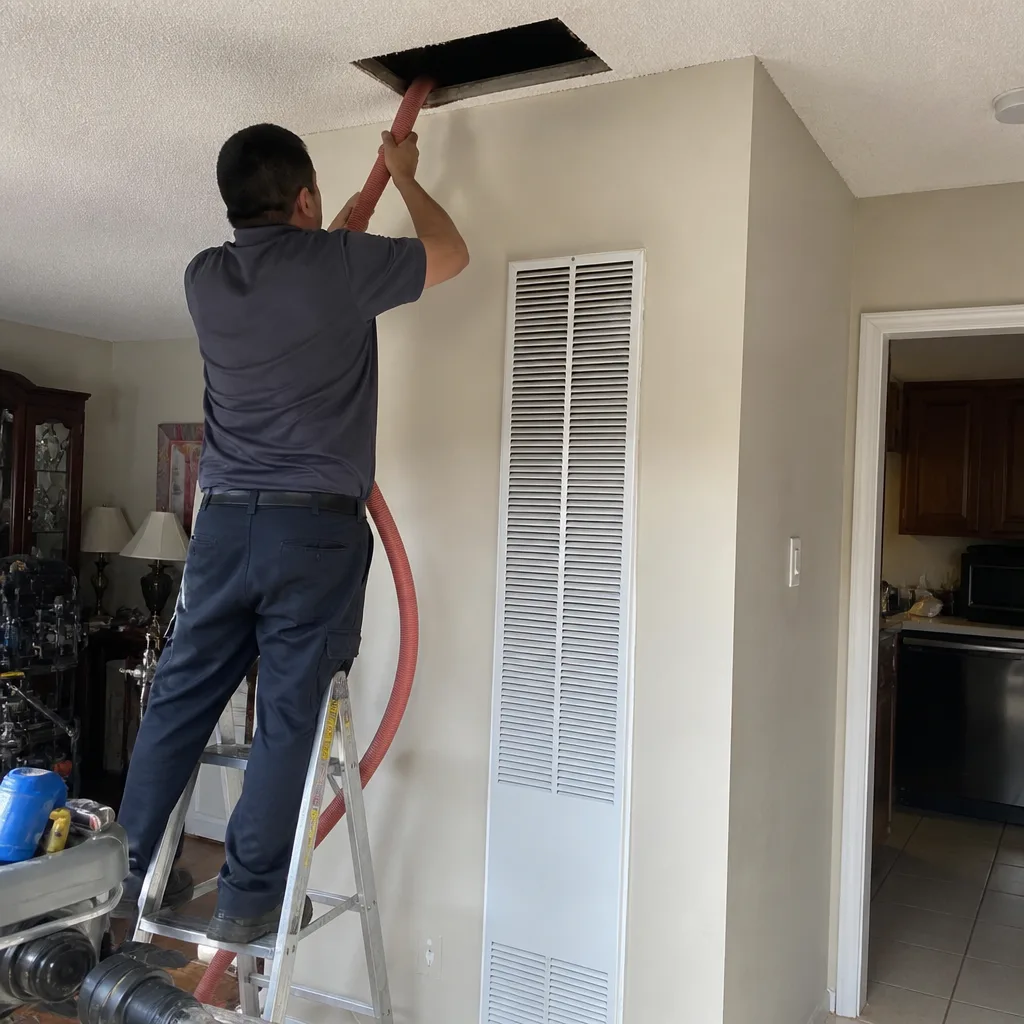
- Negative-air connection: The Nikro or equivalent HEPA vacuum is connected to the duct system, typically at the air handler or a main trunk line, and turned on to establish negative pressure throughout the ducts.
- Register-by-register agitation: Each supply and return register is opened one at a time. The rotary brush enters through the register opening and agitates the duct run back to the trunk line, while compressed air is used on longer runs to dislodge debris beyond brush reach. The negative pressure carries all loosened material to the collection unit.
- Trunk line and plenum cleaning: Once all branch runs are done, the main supply and return trunk lines are cleaned, followed by the return plenum and the air handler cabinet, blower fan, and evaporator coil if accessible.
- Filter replacement and system reassembly: The filter is replaced, access panels are closed and re-sealed, and all registers are reattached. The system is run briefly to confirm proper airflow.
- After-photo documentation: The technician opens the access panel again and photographs the interior of the cleaned ducts. You should receive these photos, they are your proof the work was done. This is a non-negotiable part of the HVAC Cleaning in Torrance standard we hold to.
The Relay Visibility Guarantee Applied to Torrance Ducts
Cardinal Air Duct Torrance is part of the Relay Home Co. family, which has been building and operating home service businesses since 2005. Every Cardinal location is independently owned and operated, but each one is held to the same standard: The Relay Visibility Guarantee. That guarantee means three specific things on a Torrance duct cleaning job.
First, you get a live trackable arrival time, the same way you track a rideshare or a food delivery. You see where your technician is and when they will arrive, no four-hour windows and no phone tag. Second, you get before-and-after photo documentation of the interior of your ducts. Not stock photos, your actual ducts, photographed through the access panel before cleaning and after cleaning. In a Torrance home, where the problem is often that gray-green film on the inside of flex duct, those photos should show a visible difference: the inner liner should go from coated to clean, and the metal of sheet metal ducts should go from dull to bright. Third, you get a digital invoice payable by link, no paper, no call to process payment, everything from your phone.
We also run a 365-Day Done Right Promise on every job. If the work isn’t right within 365 days, we return and correct it at no charge. That is the longest-standing satisfaction window in the trade, and it applies to every booking without exception. Combined with a written price before any work starts, you have the three things most duct cleaning companies won’t give you: a confirmed arrival, proof of work, and a price that doesn’t move.
Common Mistakes to Avoid
- Falling for the $99 whole-home special. A Torrance duct cleaning that costs less than a dinner for two in Old Torrance is not a cleaning, it’s a sales appointment. The price will change once the technician is in your living room.
- Hiring without verifying NADCA-standard equipment. A truck-mounted vacuum without rotary brush agitation is not source removal. Ask what equipment they run and what filtration the vacuum uses before booking.
- Skipping before-and-after photos. If a company cannot show you the inside of your ducts after cleaning, you have no proof the work was done. Demand photo documentation of your actual ducts.
- Ignoring the access panel. A contractor who cleans through your registers only is leaving the trunk lines and plenums untouched, which is where the worst buildup lives. The access panel must be opened.
- Replacing flex duct with more flex duct without addressing moisture. If your Torrance flex ducts have mold from marine-layer humidity, swapping in new flex duct without sealing attic air leaks means you will repeat the problem in five years.
- Forgetting to clean the dryer vent. Your dryer vent is a separate system from your HVAC ducts, and it needs its own cleaning. Lint-clogged dryer vents are a fire hazard, and Torrance’s humid air makes lint stickier and more likely to accumulate.
- Assuming a clean-looking register means clean ducts. The register is the exit point. The duct behind it can be coated in years of humid dust and you would never know without looking inside.
When to Call a Professional
You should call a duct cleaning professional in Torrance if you see visible dust blowing from registers when the system runs, if you notice a musty smell that intensifies when the heat or AC kicks on, if anyone in the home has unexplained respiratory irritation that improves when you are away, or if you have lived in your home for more than five years without a cleaning. Homes within two miles of the coast should consider cleaning more frequently than the typical five-to-seven-year interval because the marine layer accelerates buildup. If you just completed a remodel with drywall sanding, that fine dust will be throughout your ducts and needs to come out. Cardinal Air Duct Torrance offers free estimates in Torrance – call (424) 488-0361 to get your system assessed.
Frequently Asked Questions
A standard whole-home duct cleaning in Torrance runs between $350 and $650 for a single-family home with one HVAC system. A two-bedroom with metal ducts will cost less, a large South Torrance home with flex duct and two systems will cost more. Call (424) 488-0361 for an exact quote, estimates are free.
Cheap quotes are cheap because the company is not doing a complete job. A $99 or $199 offer is a door-opening price that will escalate once the technician finds, or invents, additional problems. If a quote is below $250 for a whole-system clean, the company is cutting corners on equipment, time, or both.
You know the work was done because you receive before-and-after photos of the interior of your ducts, taken through the access panel. If a company cannot or will not provide those photos, you have no way to verify the cleaning happened, and you should choose a contractor who documents their work.
For most Torrance homes, every five to seven years is appropriate. Homes within two miles of the coast, where marine humidity accelerates dust adhesion and mold risk, benefit from a four-to-five-year interval. Homes with pets, allergy sufferers, or recent renovation work should lean toward the shorter end.
Yes, and measurably so. The marine layer that rolls in from Santa Monica Bay keeps overnight humidity at 65% to 80% for months at a stretch. That moisture enters your ducts through the return air system and causes dust to adhere to duct walls as a film rather than blowing through as loose particulate. Dry-climate homes never develop this film, which is exactly why national guides miss it.
It can, particularly when the cleaning removes accumulated pollen, dust mite byproducts, and the humid dust film that holds those allergens inside the duct system. If you have allergy sufferers in the home, combine duct cleaning with a MERV 11 or higher filter replacement, and consider scheduling the cleaning before allergy season starts in spring.
The Bottom Line
Torrance is not Phoenix, and your ducts are not the same as a house in Dallas. The marine layer, the salt air, and the aging tract-home ductwork that runs through this city create a specific set of conditions that generic guides ignore. A proper cleaning is a source-removal job done with rotary brush agitation, HEPA-filtered negative air, and photo documentation, priced between $350 and $650 and delivered with a written price before work starts. For ongoing care tips, check our Dryer Vent Cleaning Maintenance Checklist for Torrance Homeowners. The 365-Day Done Right Promise and the Relay Visibility Guarantee remove the guessing from the process. When you are ready to see what is inside your ducts, we are ready to show you.
Written by Omar Haddad, Owner at Cardinal Air Duct Torrance, serving Torrance since 2005.
See the difference
 Before
 After
After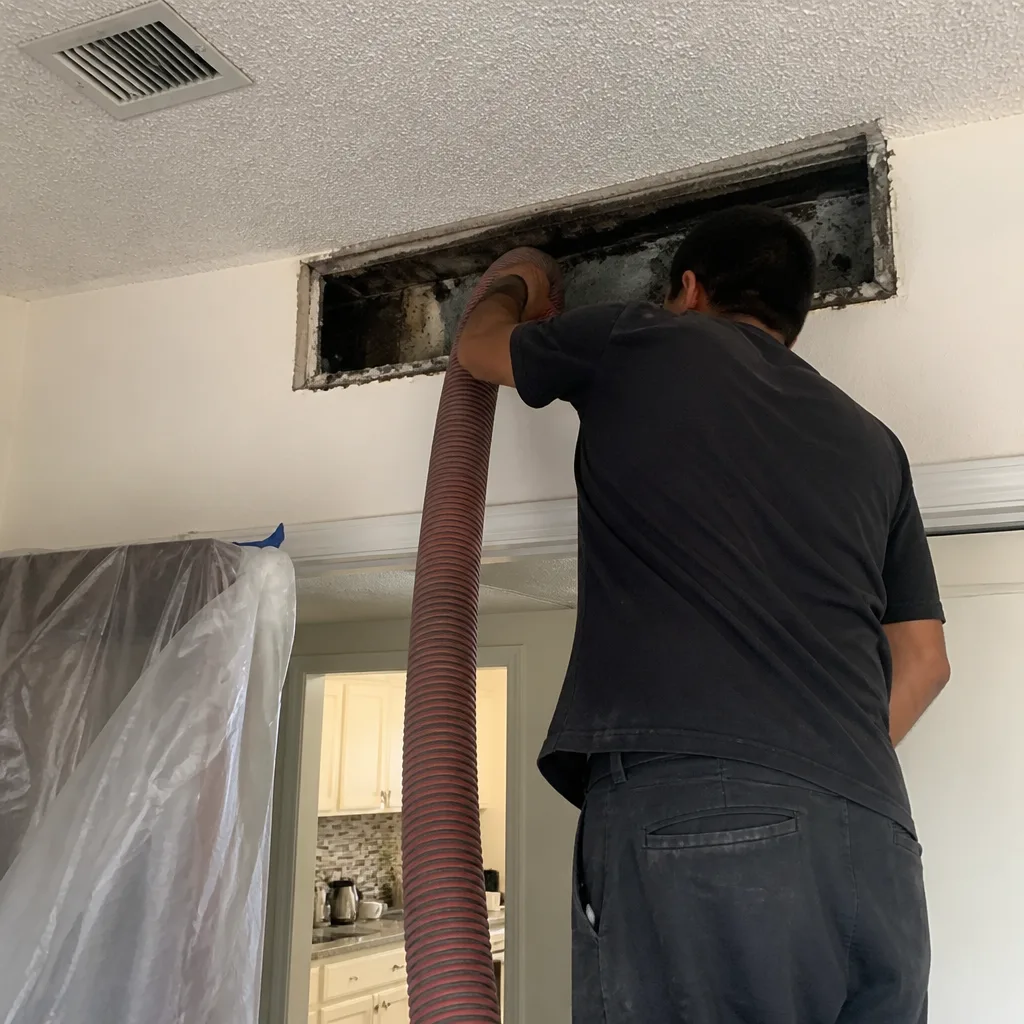 Before
 After
After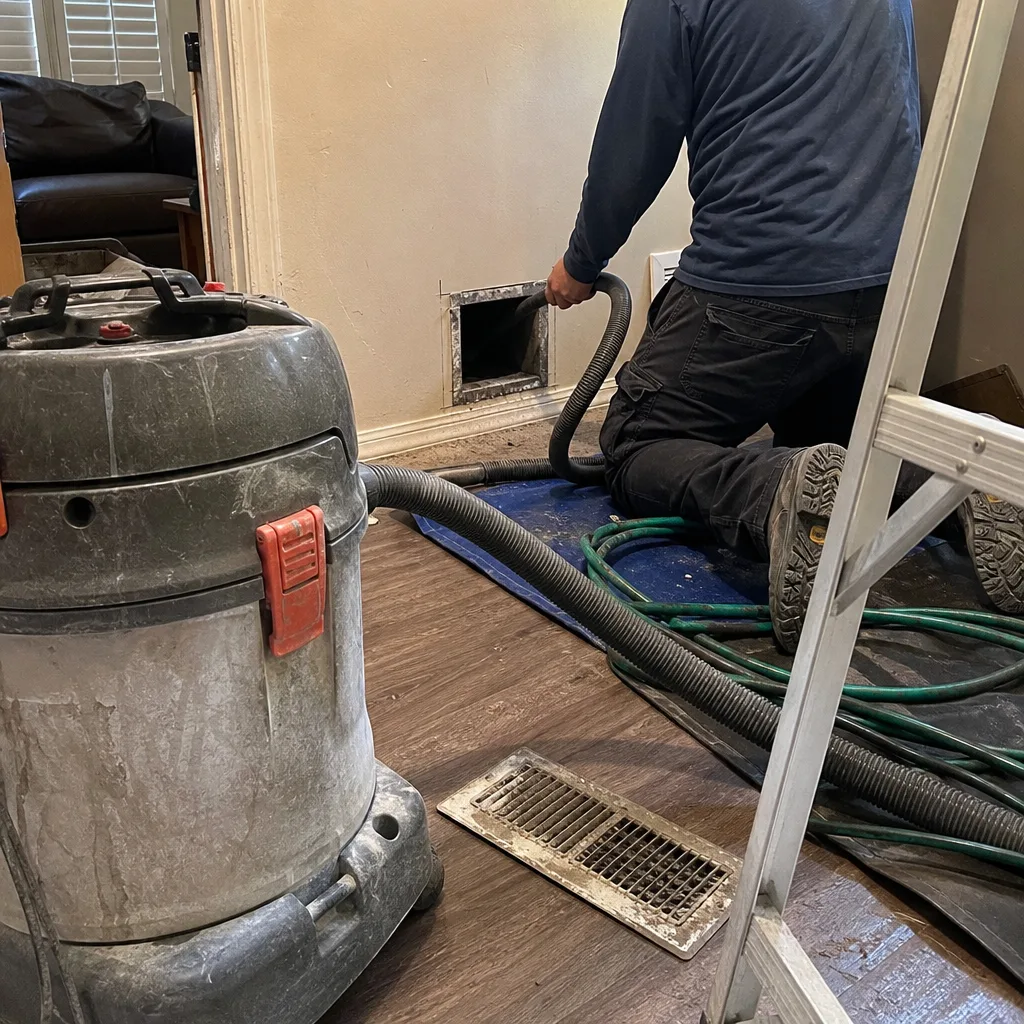 Before
 After
After