
Last updated October 15, 2026
 Whole-home duct cleaning
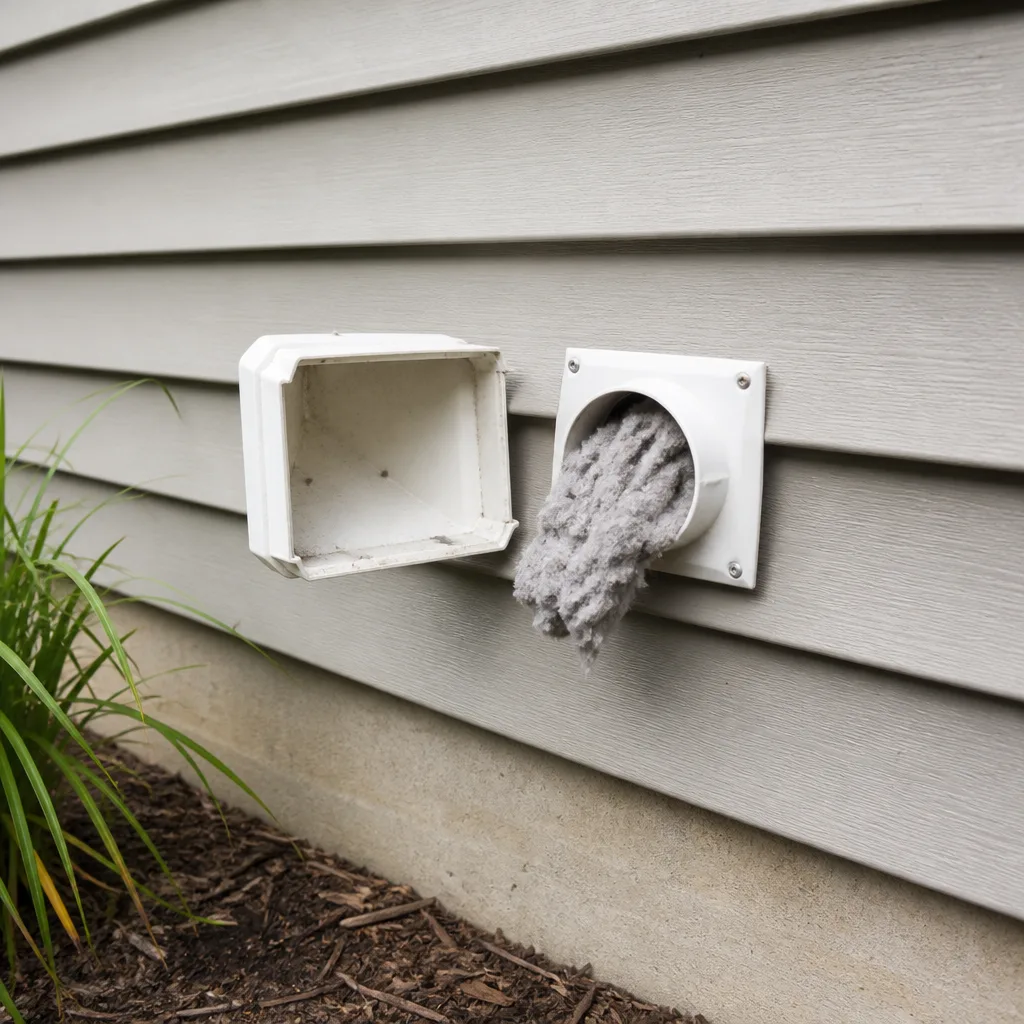 Dryer vent cleaning
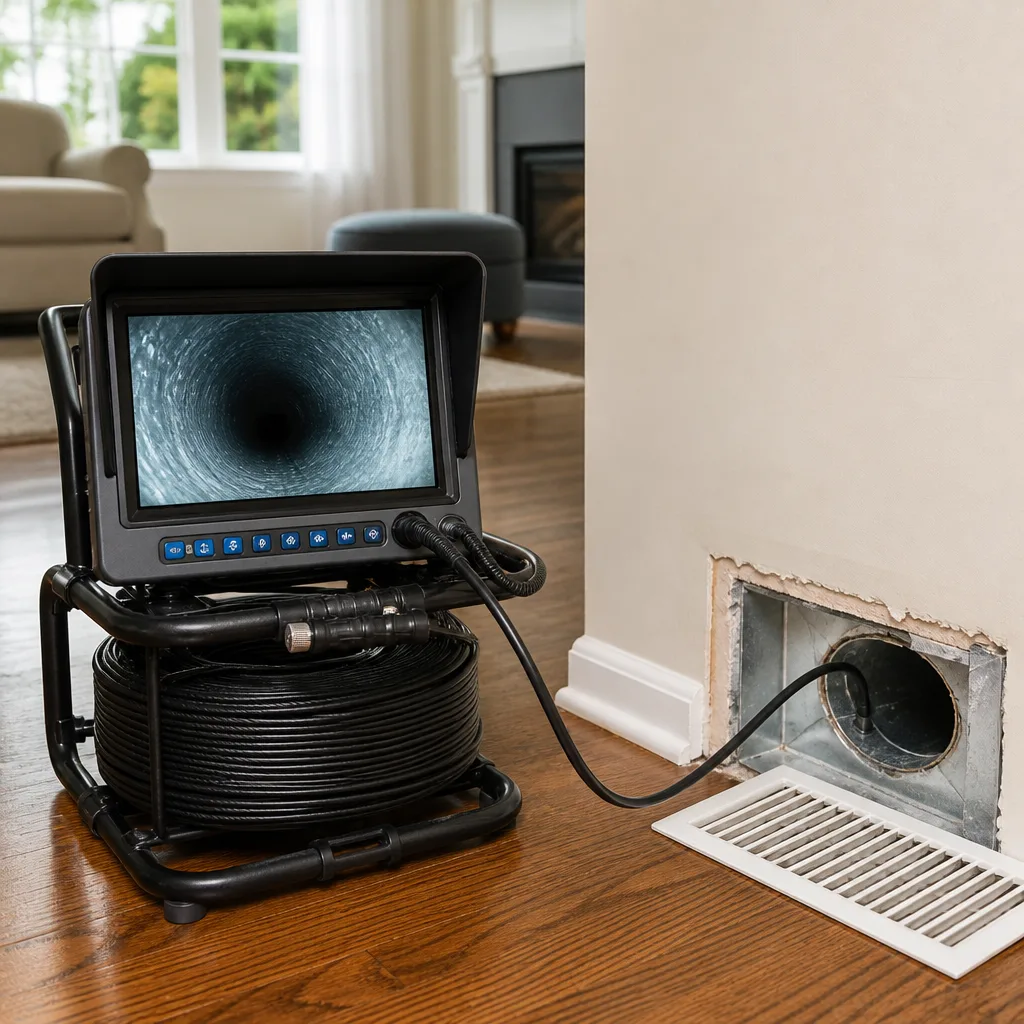 Camera inspection
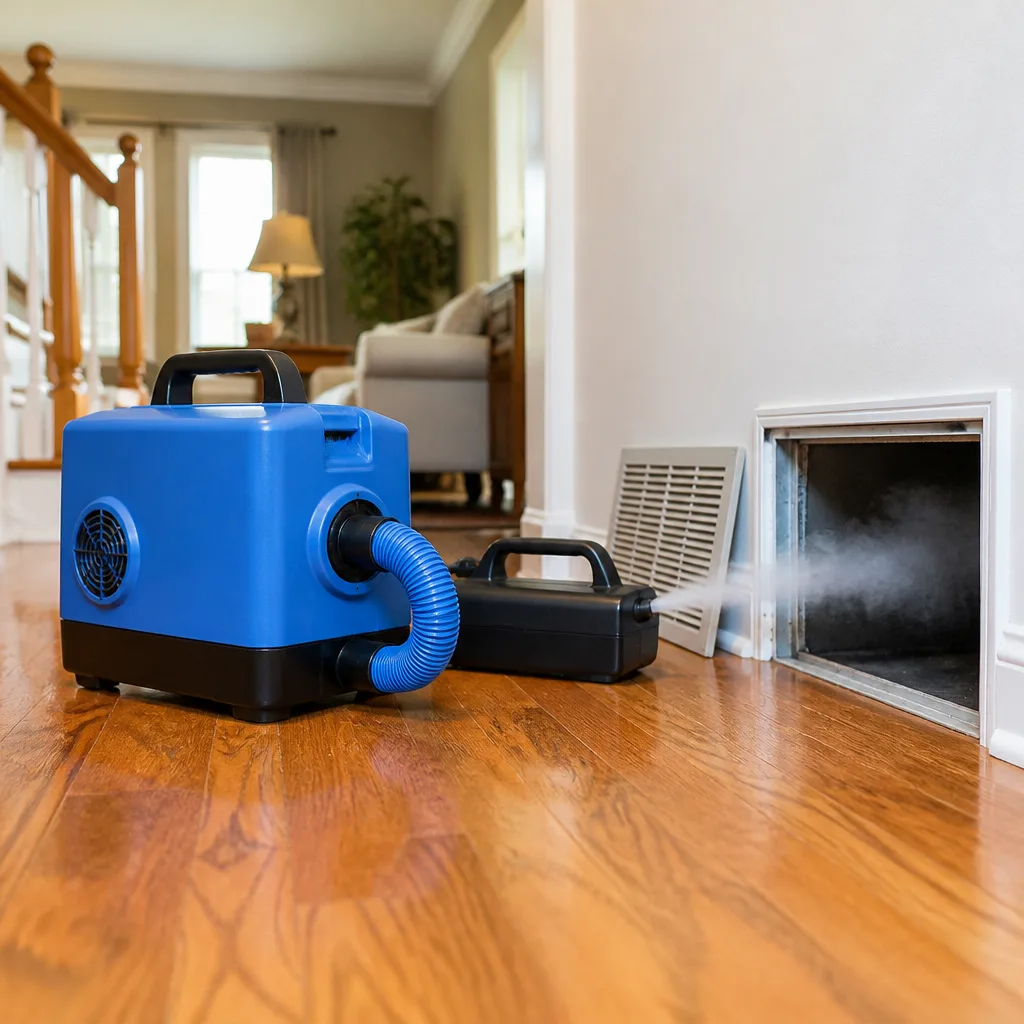 Sanitizing & deodorizing
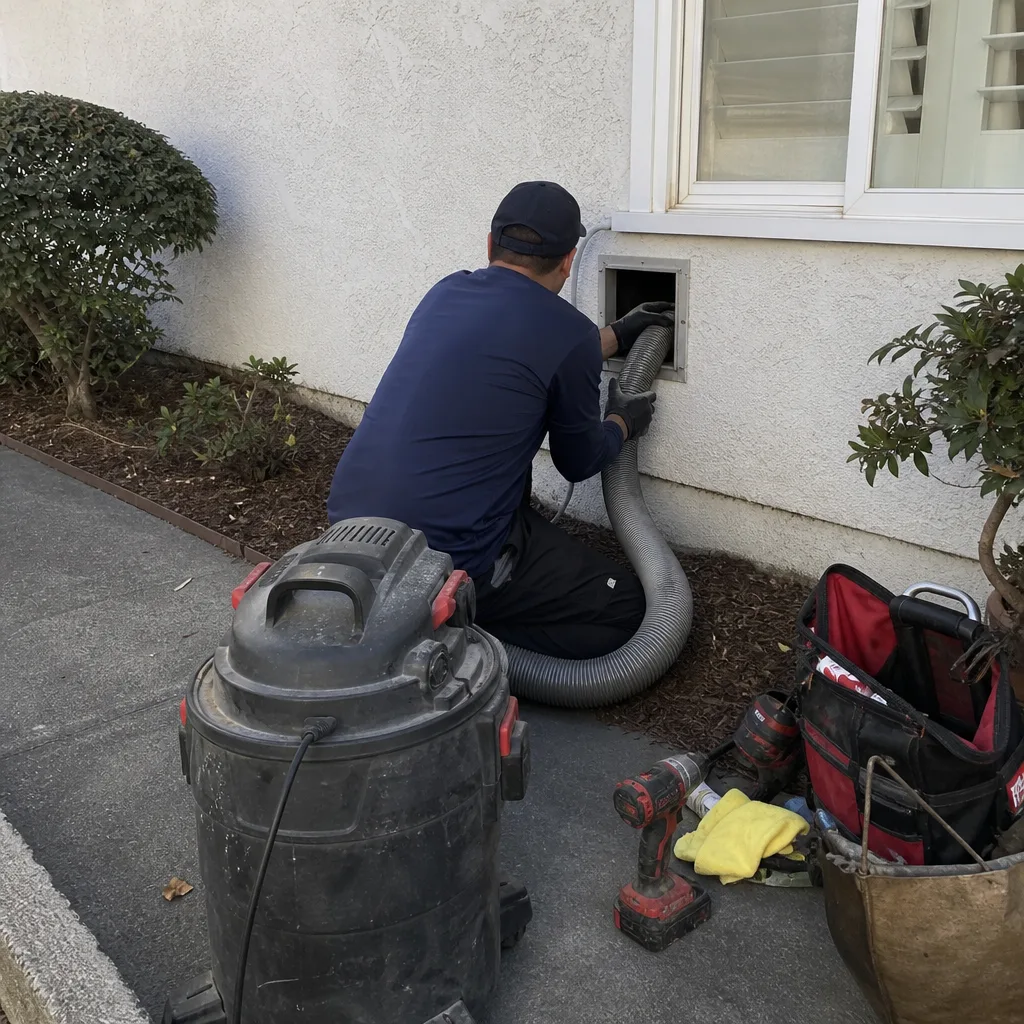
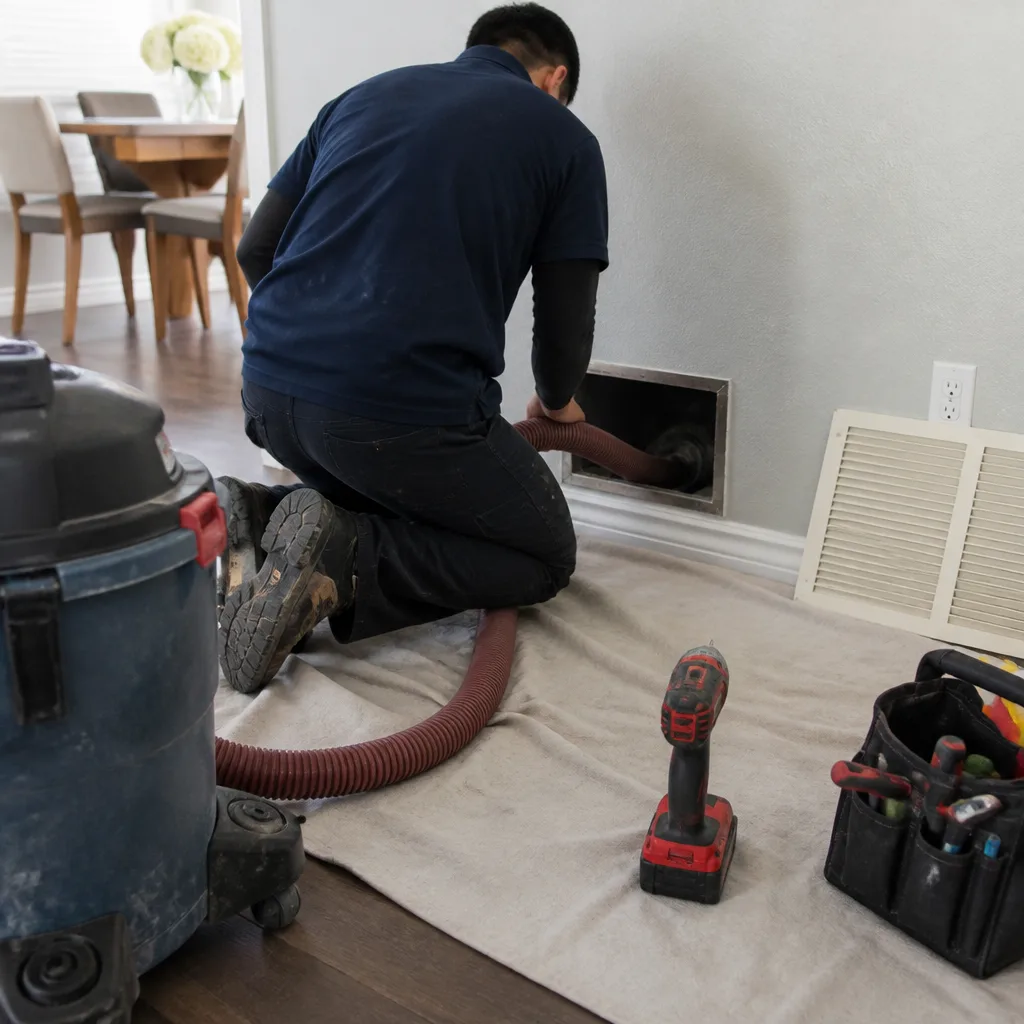
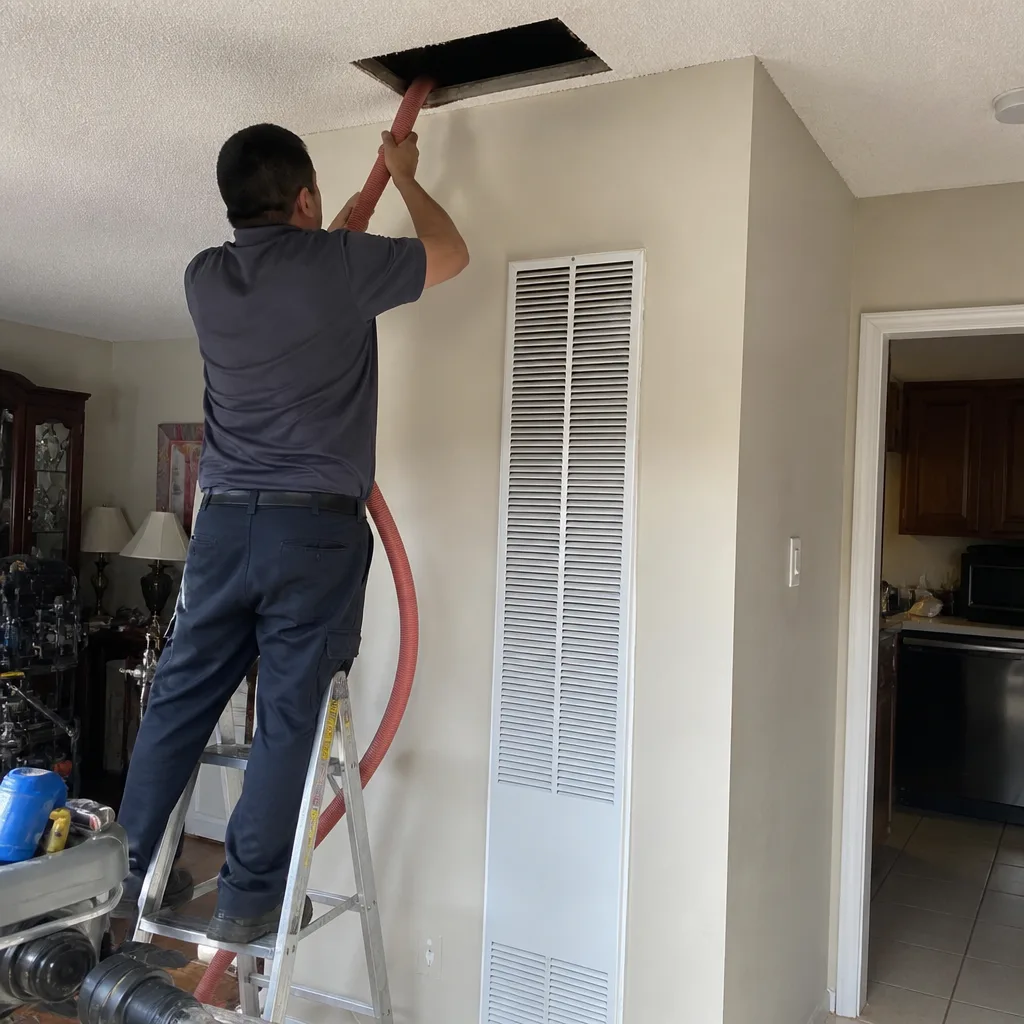
Whole-system duct and dryer vent check with before-and-after photos - you see exactly what came out of your vents
That "$99 whole-house special" is a bait ad - the real number appears once they are in your hallway, or the "clean" is a shop-vac at the register. We photograph the inside of your ducts before and after instead.
Seasonal Air Duct Cleaning Care for Torrance: Year-Round Homeowner’s Guide
Torrance has a reputation for mild weather, and for the most part, that’s earned. But “mild” does not mean your air ducts live an easy life. The reality is that Torrance sits at the confluence of three distinct forces: the persistent marine layer, seasonal Santa Ana wind events, and a summer marine clearing pattern that pushes HVAC systems hard. Each of these leaves a different kind of deposit inside your ductwork. Most homeowners wait for a visible problem before thinking about their ducts, and by then the system has been circulating compromised air for months. This guide maps duct care to the actual Torrance weather calendar, so you know exactly what to check, when to check it, and when our Air Duct Cleaning services in Torrance actually pay for themselves in system longevity and indoor air quality.
Quick Answer
The most effective seasonal duct maintenance schedule for Torrance homes is built around three HVAC stress cycles: the June Gloom humidity window, the July through October Santa Ana particulate surge, and the mild but damp winter months. Schedule a professional air duct cleaning in Torrance in September, before the worst Santa Ana winds arrive, and replace your filters on a schedule driven by Torrance’s AQI patterns rather than a generic 90-day rule.
Styles & brands we work with
Table of Contents
- Why Torrance’s “Mild Climate” Is Harder on Ducts Than You Think
- The Torrance HVAC Stress Calendar: Three Seasons That Actually Matter
- Month-by-Month Duct Maintenance Checklist for Torrance Homeowners
- How to Set a Filter Replacement Schedule Based on Torrance AQI
- Santa Ana Winds and Duct Contamination: The Fall Spike Most Homeowners Miss
- June Gloom, Humidity, and Mold Risk in Coastal Ductwork
- Monthly Self-Checks: What to Look For Without Opening the Ductwork
- When to Call a Pro Mid-Season: Symptoms That Override the Calendar
Why Torrance’s “Mild Climate” Is Harder on Ducts Than You Think
The phrase “coastal microclimate” gets thrown around a lot, but Torrance genuinely sits inside one of the more unusual weather patterns in Los Angeles County. You have the Pacific Ocean pushing cool, moist air inland from the west, the Palos Verdes Peninsula blocking some of that flow to the south, and the San Gabriel Mountains channeling desert air down through the passes during Santa Ana events. The result is a city where the temperature rarely swings dramatically, but the particulate load in the air shifts constantly.
Here’s what that means for your ductwork. Warm, moist air from the marine layer creates ideal conditions for dust to adhere to the interior surfaces of supply and return ducts rather than staying airborne and getting caught by your filter. Coastal moisture acts like glue. Then, when Santa Ana winds arrive from the northeast, they carry fine Mojave Desert particulate that is small enough to slip through standard fiberglass filters. That particulate settles into the film left by the humid months, building layer after layer of material that your HVAC blower pushes past every single time it cycles.
In our experience maintaining systems across Torrance, we repeatedly see duct interiors that look far worse than the home’s age would suggest. The homes near the coast get hit with moisture-driven adhesion. The homes east of Crenshaw Boulevard, closer to the inland transition zone, get a heavier dose of dry particulate. Neither pattern follows the generic “spring and fall cleaning” advice that national guides recycle. Torrance needs a schedule built for Torrance.
There is also an architectural factor at play. A significant portion of Torrance’s housing stock was built between the 1950s and 1970s, when return-air pathways were designed with less attention to filtration than modern code requires. Older systems often have return ducts that pull air from unconditioned crawl spaces or attics, introducing whatever is in those spaces into the air stream. This is why two homes on the same street can have wildly different duct contamination levels despite identical square footage.
The Torrance HVAC Stress Calendar: Three Seasons That Actually Matter
Forget spring, summer, fall, and winter. For duct health in Torrance, the year divides into three operational phases, each with a distinct contaminant profile and a distinct set of homeowner actions. Understanding these phases is the difference between cleaning on a schedule that fits your system and cleaning on a schedule that fits a magazine article written in Ohio.
Phase One: The June Gloom Humidity Window (Late May through July)
June Gloom is the local term for the persistent marine layer that parks itself over the South Bay for weeks at a time. Temperatures stay mild, which means HVAC systems in Torrance run less frequently than they do inland. That reduced airflow is exactly the problem. Less air moving through the system means less opportunity for the natural drying effect that constant airflow provides. Ducts stay damp longer. Damp dust is sticky dust. And in homes where the ducts pass through unconditioned space, such as an attic, the temperature differential between the cool conditioned air and the warm attic air can create condensation on the exterior of the ductwork, which seeps inward over time.
This is also the window when mold spores are most active in coastal environments. The marine layer keeps humidity levels elevated for extended periods, and any organic material inside the ducts, including pet dander, pollen, and skin cells, becomes a potential food source. The air coming out of your vents may smell musty even when the system itself is functioning normally. If you notice that smell during June or July in Torrance, the ducts are usually the source, not the HVAC unit itself.
What to do during this window:
- Run your fan in “On” mode for 15 to 20 minutes per day, even when neither heating nor cooling is needed. The airflow helps dry duct interiors.
- Inspect the area around supply registers for any visible moisture staining, which signals condensation inside the duct run.
- If musty smell persists more than a week, schedule an inspection sooner rather than later. Mold in ducts does not self-resolve.
Phase Two: Summer Marine Clearing and AC Peak Load (August through October)
By August, the marine layer typically burns off earlier in the day, and Torrance’s summer pattern settles into its warmest stretch. Air conditioners run daily, sometimes continuously in larger homes or upper-floor units. This is the period when your filter works hardest, and it is also the period when any existing duct contamination gets redistributed most aggressively. The blower runs at full speed, dislodging accumulated dust from the walls of the ductwork and pushing it into living spaces. If you find fine dust settling on furniture within a day or two of cleaning, that dust is coming from your ducts.
This phase is also when airflow imbalances become most noticeable. Rooms that were always a little warmer than the rest of the house suddenly feel hot. That is frequently a sign of duct leakage or blockage, not a failing air conditioner. Heat rises into upper-floor rooms through the duct runs, and any gap or disconnect in the system loses conditioned air into the attic or crawlspace before it reaches the register.
During this window, pay attention to how long the AC runs to reach your thermostat setpoint. If runtime is increasing while the outdoor temperature is stable, duct restrictions are a prime suspect.
Phase Three: Santa Ana Particulate Surge and the Damp Winter (October through February)
Santa Ana events in Southern California are primarily an autumn phenomenon, with the strongest winds typically occurring between late October and early December. These are the offshore winds that originate in the Great Basin and Mojave Desert, compressing and heating as they descend through the mountain passes. By the time they reach Torrance, they carry an enormous load of fine desert dust, sagebrush pollen, and whatever particulate they have picked up across the Inland Empire.
The critical detail about Santa Ana dust is its particle size. Much of the material is in the PM2.5 and PM10 range, meaning it is fine enough to pass through standard fiberglass filters without being captured. The California Air Resources Board publishes AQI data for the South Coast Air Basin, and Torrance routinely shows elevated PM10 readings during Santa Ana events even when the sky looks clear. That particulate is entering your home through every opening, including the HVAC intake.
Once inside the ducts, this fine dust behaves differently from household dust. It is abrasive. It settles into the blower motor housing, coats the evaporator coil, and embeds itself in the porous interior surfaces of flexible ductwork. Because it is so fine, it does not get caught by the filter on the return side. This is why a professional cleaning timed for September, before the Santa Ana season begins, can meaningfully reduce the total contaminant load in your system all winter; see our Air Duct Cleaning Permits, Codes & Inspections in CA: What You Need to Know for regulatory context.
During the actual wind events, your system is mostly recirculating indoor air, not pulling fresh air from outside. But the particulate that entered the home during the event eventually gets drawn into the return ducts over the following weeks. The contamination spike from a single strong Santa Ana event can take four to six weeks to fully work its way through a system.
Month-by-Month Duct Maintenance Checklist for Torrance Homeowners
The following checklist is organized by month, not by generic season. Each entry is tied to the specific conditions Torrance experiences during that part of the year.
January
- Post-Santa Ana inspection window. Check your filter and look for a fine reddish-brown tint, which indicates desert particulate accumulation.
- Run the fan for 10 minutes with a window open one inch to exchange indoor air after the prolonged closed-window period.
- Verify all supply registers are fully open, especially in rooms that were unused over the holidays.
February
- Inspect the area around the return grille for dust streaking on the wall or ceiling. This tells you how much particulate is bypassing the filter housing.
- Clean return grilles with a vacuum brush. The grille is the first point of contact for all return air.
- If you have pets, mark this month for a deeper filter inspection. Winter shedding increases dander load in the system.
March
- Check for visible dust accumulation on supply register blades. If the blades are coated, the ducts are coated.
- Walk the exterior of the home and verify the HVAC condensate drain line is clear. Standing water near the foundation can indicate a clogged drain.
- Consider scheduling a professional inspection if you skipped the previous fall cleaning.
April
- Spring pollen season in the South Bay is real. If you live near Torrance’s substantial tree canopy, replace your filter with an upgraded MERV 11 or higher rated option this month.
- Test the airflow balance between rooms by holding a tissue near each supply register. Significant differences signal duct restriction.
- Check the filter housing for gaps where unfiltered air can bypass the filter entirely. Gaps as small as one-eighth of an inch allow significant bypass.
May
- Pre-June Gloom preparation. Ensure bathroom and kitchen exhaust fans vent to the outside, not into the attic. Venting into the attic adds moisture to the same space your ducts occupy.
- Run the system briefly and listen for any new vibration or flapping sounds. Duct connections can shift after months of heating-mode expansion and contraction.
- If you can access your attic, visually check for any obvious disconnected duct sections.
June
- June Gloom begins. Monitor for musty odors from supply registers during the first two weeks.
- Run the fan in “On” mode for 15 to 20 minutes per day, even when temperatures are mild.
- If you see condensation on registers or nearby walls, investigate. Duct insulation may be inadequate for coastal humidity.
July
- Filter check at minimum. If the filter is visibly gray or brown, replace regardless of the calendar.
- Rooms with west-facing windows in Torrance, particularly in neighborhoods like Hollywood Riviera and South Torrance, run hotter in July. Pay attention to whether those rooms are reaching comfortable temperatures.
- Clean ceiling fan blades. Dust on blades gets reintroduced into the air stream and drawn into the return ducts.
August
- Peak AC usage month for Torrance. Mark this as the month to verify runtime. If the system runs more than 12 hours daily and struggles to maintain setpoint, duct leakage may be contributing.
- Check the condensate pan if accessible. A full or sludgy pan indicates poor drainage, which raises humidity inside the system.
- Replace the filter before the heat of late August, even if you replaced it in June.
September
- Primary professional cleaning window. Schedule your air duct cleaning in Torrance before the Santa Ana season starts. Summer accumulation gets removed now, reducing the total load once the desert winds arrive.
- After cleaning, change the filter so your system starts the fall with a fresh capture medium.
- Walk the home and verify that all supply registers are open and unobstructed by furniture or rugs.
October
- First Santa Ana events typically arrive. Check AQI readings daily during wind events at airnow.gov.
- If AQI exceeds 100, run your system on “Auto” with a MERV 11 or higher filter to capture as much incoming particulate as possible.
- Before closing windows for the wind event, do a thorough vacuuming. The dust you remove from floors now will not get into the ducts later.
November
- Peak Santa Ana month. Inspect the filter every two weeks during this month, not monthly.
- Look for dust streaking on vertical surfaces near the return grille. Streaking indicates the filter is saturated and bypass is occurring.
- If your home has a fireplace and you use it during the cooler months, fireplace ash is a major particulate source that pulls directly into the return path.
December
- Winter in Torrance means mild temperatures and occasional rain. The system cycles between heating and off, which allows dust to settle rather than stay suspended in airflow.
- Annual attic inspection. If you can safely access your attic, visually check duct connections, insulation condition, and any pest activity. Rodents in Torrance attics are a year-round concern, and they chew through flex duct.
- Schedule your next professional cleaning for September of the following year, or sooner if the system has not been cleaned in over two years.
How to Set a Filter Replacement Schedule Based on Torrance AQI
The standard advice to “change your filter every 90 days” is a national average that fails almost every home in the South Bay. Torrance air quality fluctuates dramatically based on wind direction, time of year, and proximity to the Port of Los Angeles and the 405 and 110 freeway corridors. A filter that is still clean after 90 days of mild summer weather may be completely saturated after four weeks of Santa Ana winds. Replacing on a fixed calendar means you are sometimes throwing away a filter with remaining life and sometimes running a saturated filter that is doing nothing.
The more useful framework for Torrance is an event-based replacement schedule driven by how your filter actually looks and what the air outside has been doing. Here is how to build that schedule.
- Establish a baseline in January. Start the year with a fresh filter. Note the date. Check it visually every two weeks during the first month to understand what a month of winter air does to your specific system. A filter that is lightly gray after 30 days tells you something different than a filter that is dark brown.
- Increase inspection frequency during Santa Ana season (October through December). Check the filter every week during active wind events. If the filter looks dirty, replace it immediately. Do not wait for a calendar date. A MERV 8 filter in a home near a busy corridor during a strong Santa Ana event can load in a matter of days, not weeks.
- Upgrade the filter rating during fire season and Santa Ana season. Standard fiberglass filters are MERV 1 to 4, which capture only the largest particles. A pleated filter rated MERV 11 captures a meaningful portion of PM2.5, which is the particulate that most affects respiratory health. For homes in Torrance neighborhoods east of Crenshaw Boulevard, where inland air mixes with coastal air, MERV 11 is a sensible year-round choice. For coastal neighborhoods like Hollywood Riviera, MERV 11 during Santa Ana season and MERV 8 during summer is often sufficient. Homes with pets, children, or respiratory conditions should consider MERV 13, but verify that your blower can handle the increased static pressure. Some older systems struggle with MERV 13 and lose airflow as a result.
- Use a filter with a visible dirt line to make replacement decisions. Pleated filters show contamination on the surface. When the pleats are uniformly gray and you can no longer see the filter material between them in bright light, the filter is done regardless of time in service.
- Write the install date on the filter frame. This is a simple habit that tells you exactly how long the filter has been in service and removes guesswork. It also gives any technician a useful data point if the system develops problems.
One additional Torrance-specific note: the Port of Los Angeles and the nearby refineries generate fine particulate that, depending on wind direction, can settle over parts of Torrance even on otherwise clear days. If you live in North Torrance or anywhere near the 405 corridor, your filter loads faster than the citywide average. The last thing you want is a filter so clogged that the blower begins pulling unfiltered air through gaps in the housing, which is exactly what happens when static pressure rises beyond what the filter was designed for.
Santa Ana Winds and Duct Contamination: The Fall Spike Most Homeowners Miss
If you take only one thing from this guide, make it this: September is the most important month for duct maintenance in Torrance, not because September itself is challenging, but because it is the calm before the worst particulate event of the year.
Santa Ana winds begin when high pressure builds over the Great Basin. Air flows downhill toward the coast, compressing and warming as it descends. By the time it reaches the Los Angeles Basin, the wind is hot, dry, and loaded with dust from the Mojave. The South Coast Air Quality Management District issues windblown dust advisories during these events, and particulate concentrations in Torrance can spike to levels that rival some of the smoggiest summer days.
Here is the sequence of events that most homeowners never see. During a Santa Ana event, the wind pushes fine dust through every small opening in a home: window gaps, door seals, attic vents, and the fresh-air intake on the HVAC system. The dust settles on floors, furniture, and horizontal surfaces. Over the following weeks, as people move through the home and doors open and close, that dust becomes airborne. The HVAC system draws it into the return ducts. Because much of the material is fine enough to pass through a standard filter, it moves past the filter, through the blower, and into the supply ducts. Some of it deposits there. Some of it exits into living spaces. Some of it accumulates on the underside of the evaporator coil, where it sticks to the condensation that forms during cooling cycles. That layer of dust on the coil reduces heat transfer efficiency, which increases energy consumption and reduces cooling capacity.
A professional cleaning timed for September removes the summer accumulation before the Santa Ana dust arrives. Think of it as clearing the plate. A clean system simply has less material for incoming particulate to adhere to. The dust that enters during October and November has a harder time finding purchase on clean, dry surfaces. And when you do run the system, the air moving through clean ducts carries less of the previous months of accumulated material into your home.
If you missed the September window, the next best option is to schedule cleaning after Santa Ana season ends in December or January. The dust has settled by then, and a cleaning at that point removes the entire Santa Ana load before the spring pollen season begins. What you want to avoid is doing nothing through the fall and then running your heating system all winter with a duct system packed full of desert particulate.
June Gloom, Humidity, and Mold Risk in Coastal Ductwork
The marine layer that gives Torrance its famous June Gloom is a low, persistent stratus cloud deck that forms when warm air inland pulls cool, moist air off the Pacific. It usually burns off by early afternoon, but for two to three months each year, the relative humidity in coastal Torrance stays above 70 percent for extended periods. That humidity finds its way into every part of your home, including the ducts.
Mold needs three things to grow: organic material, moisture, and a surface that stays damp long enough for spores to colonize. The inside of a duct, particularly a return duct that carries unfiltered air, contains plenty of organic material. Pet dander, pollen, skin cells, and dust mites all accumulate there. Add extended high humidity from the marine layer and you have the conditions for mold growth, particularly in flex duct in attics where the temperature differential creates condensation.
The most common sign of mold in ducts is a persistent musty or earthy smell that is strongest when the system first starts running. The smell is usually present in multiple rooms because the duct system is shared. If the smell comes from a single register, the issue may be localized to one duct run. If it comes from everywhere, the contamination is likely distributed.
Homeowners can take several practical steps to reduce mold risk during June Gloom. Running the fan for 15 to 20 minutes a day keeps air moving through the system, which reduces the damp, stagnant conditions that mold prefers. Making sure all bathroom and kitchen exhaust fans vent to the outside, not into the attic, removes a major moisture source from the same space the ducts occupy. And replacing filters before the humid season begins, not during, ensures the system starts with a clean capture medium rather than a filter already loaded with spring pollen that would otherwise become damp and provide an ideal mold substrate.
Professional duct cleaning is not a mold remediation service, and it is important to be clear about that. What professional cleaning does is remove the organic material that mold feeds on. If the underlying moisture problem is not addressed, such as a leaking duct in an attic or a persistently damp crawlspace, mold will return. But a clean duct is a far less hospitable environment than a dirty one. For homeowners who suspect active mold growth, the first step is an inspection to determine the source of moisture, followed by cleaning to remove contaminated material.
Monthly Self-Checks: What to Look For Without Opening the Ductwork
You do not need to open your ductwork to monitor its condition. Most of the useful signals are visible at the registers, the grilles, and the areas immediately around them. These checks take less than ten minutes and will tell you more about your system than most people learn in a decade of homeownership.
Register and Grille Inspection
Supply registers are the vents that blow air into rooms. Return grilles are the vents that pull air back to the system. Look at the blades or louvers on both. If the supply register blades have a visible coating of gray dust, that dust came from inside your ducts. Clean registers are the visual tip-off that the interior of the duct system is clean at that point in the run. Dirty registers mean the ducts supplying them are dirty.
Check the ceiling or wall around each return grille for a streaking pattern. Dark streaks radiating outward from the grille are caused by dust particles sticking to the surface as air rushes past. This is a sign that your filter is not capturing everything, either because it is saturated, because it is the wrong MERV rating, or because gaps in the filter housing are allowing bypass.
Airflow Balance Test
The inexpensive tissue test is genuinely useful. Hold a single-ply tissue near each supply register while the system is running. The tissue should deflect noticeably, and the degree of deflection should be similar from room to room. If one room shows strong airflow and another barely moves the tissue, the duct run serving the weak room likely has a restriction, a disconnect, or a damper that is partially closed. Some variation is normal in a two-story home, where the upstairs registers are farther from the blower. But a dramatic difference, such as a room that never reaches the same temperature as the rest of the house, is a signal that something is wrong in the duct run.
Listening for Vibration and Air Noise
Duct systems make predictable sounds when they are working correctly: a steady whoosh of air through the registers and a consistent hum from the blower. Changes in those sounds signal changes in the system. A new flapping sound from a specific wall or ceiling area often means a section of flex duct has worked loose from its connection and the duct material is moving with the airflow. A whistling sound at a register usually means the register is partially closed or the damper is restricting flow. A humming or buzzing from a metal duct section can indicate a loose connection that is vibrating against a joist. None of these sounds get better on their own.
Dust Accumulation Rate
Here is a reliable marker of duct condition that costs nothing. Dust a horizontal surface in your main living area thoroughly. Wait one week. Run your finger across the surface. If you can write your name in the dust after seven days, your duct system is contributing significantly to the airborne particulate in your home. This is especially meaningful in Torrance during the summer months when the AC runs frequently. The blower is circulating air through the ducts constantly, and any dust in the ducts gets aerosolized and distributed.
When to Call a Pro Mid-Season: Symptoms That Override the Calendar
The maintenance calendar in this guide is designed to keep most systems in good condition with minimal intervention. But certain symptoms should not wait for a scheduled window. If any of the following conditions appear, the problem is likely specific to your system, not seasonal, and it will not resolve on its own.
- Musty odor that persists for more than one week. The marine layer amplifies this issue, but a persistent smell means moisture and organic material are present in the system right now. Do not wait for September.
- Visible dust blowing from supply registers when the system starts. This is a classic sign of significant duct contamination. The initial burst of air dislodges accumulated dust and pushes it directly into your living space.
- A dramatic increase in energy bills during a period when usage patterns have not changed. Reduced airflow from clogged ducts or a dirty evaporator coil forces the system to run longer to reach the same temperature. The ducts are often the culprit when the filter is clean and the outdoor unit is functioning normally.
- Rooms with no airflow at all. A complete flow loss from a register usually indicates a disconnected duct section, which means conditioned air is being dumped into an attic or crawlspace. That is pure waste, and it is also pulling whatever is in that unconditioned space into the return side of the system.
- Respiratory symptoms that improve when you leave the house. If allergies, congestion, or coughing are consistently worse at home than at work or elsewhere, the indoor environment is the variable. Ducts are a primary suspect because they distribute whatever is in them through every room.
Cardinal Air Duct Torrance offers free estimates for Torrance homeowners. Call (424) 488-0361 and describe what you are seeing. We will tell you whether the issue warrants an immediate visit or can wait for a scheduled cleaning window.
See the difference
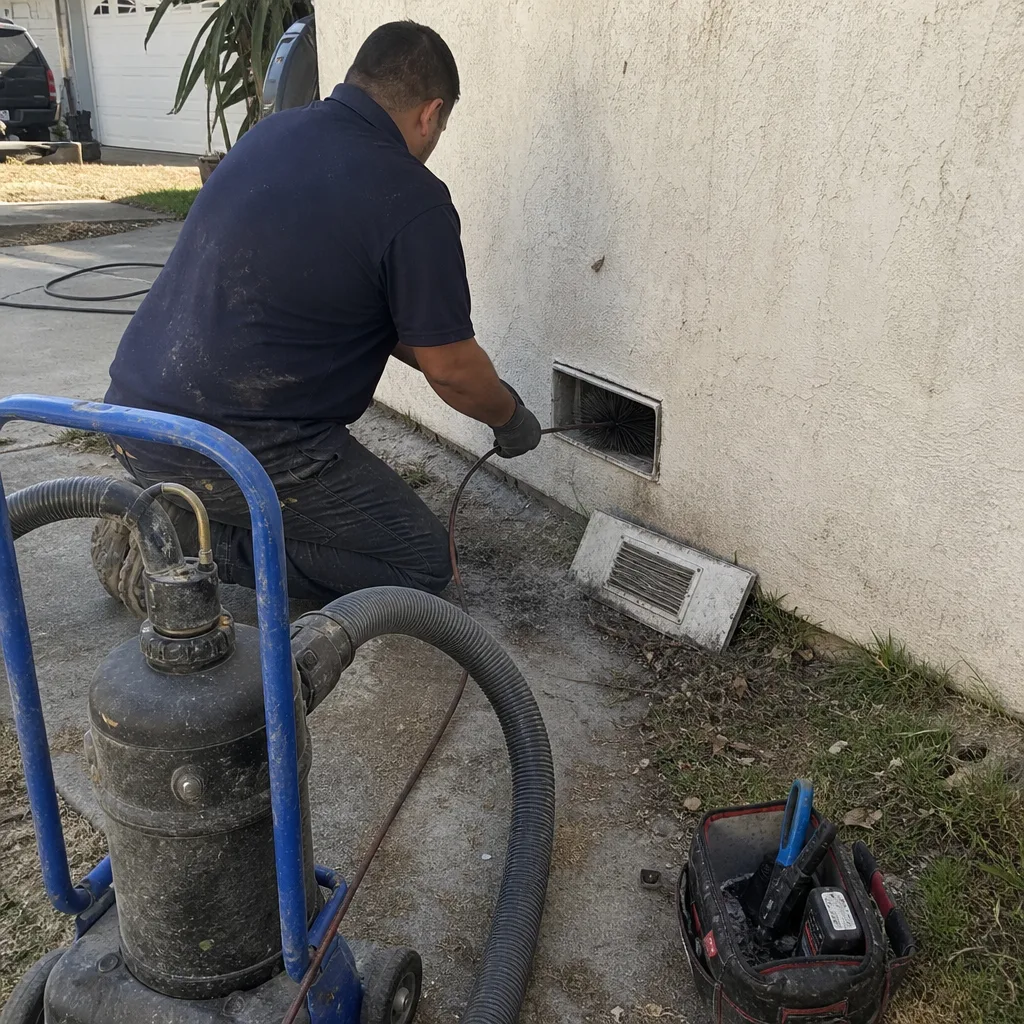 Before
 After
After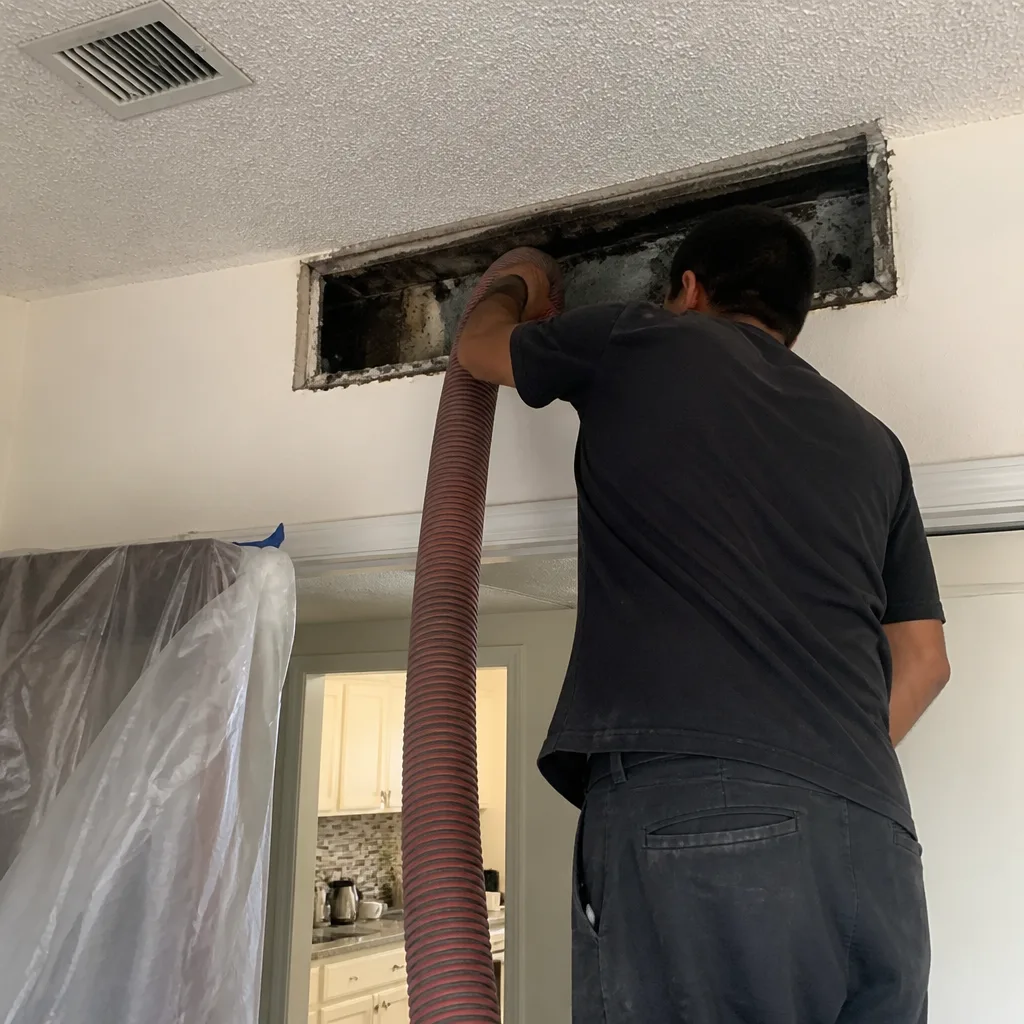 Before
 After
After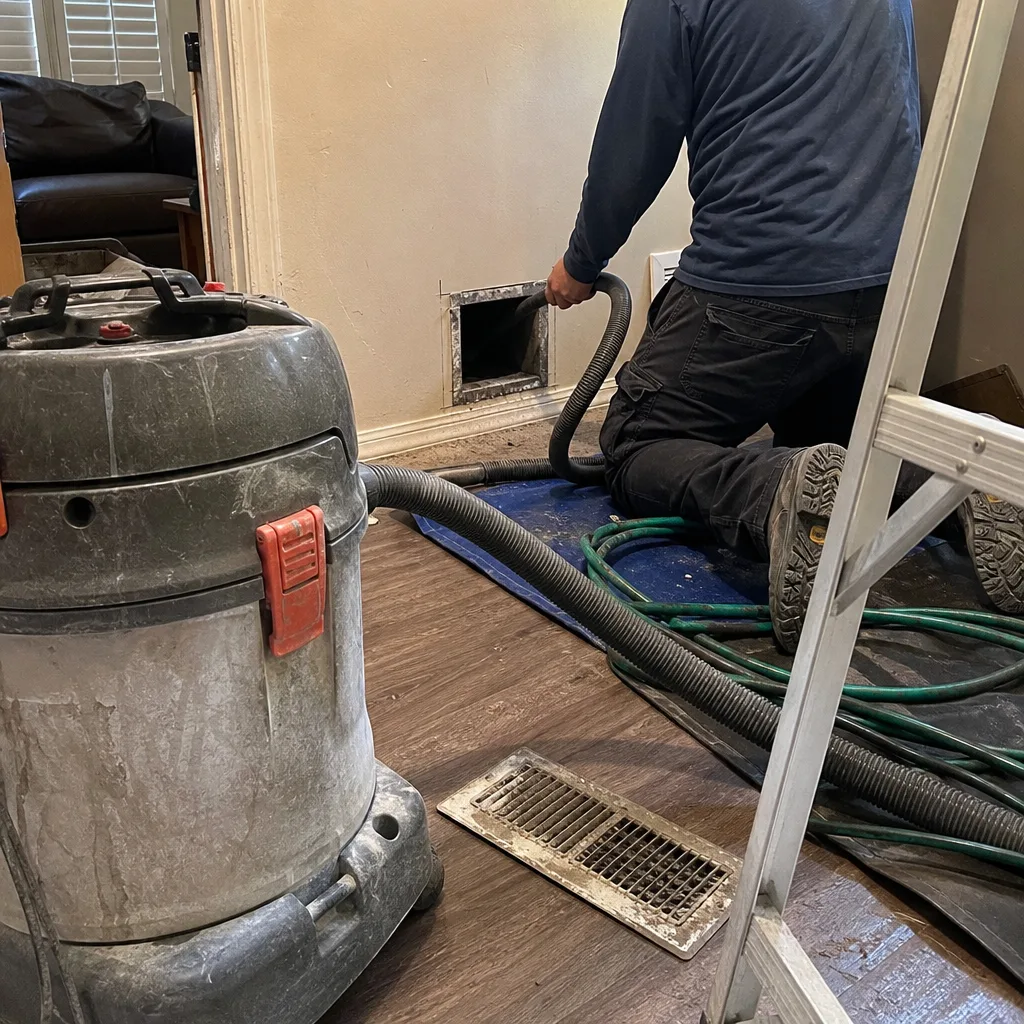 Before
 After
AfterCommon Mistakes to Avoid
- Replacing filters on a strict 90-day schedule. Torrance’s air quality swings too dramatically for a fixed calendar. Check monthly and replace based on condition. Your filter will load faster during Santa Ana season and slower during mild spring months.
- Assuming a clean filter means clean ducts. The filter captures only what passes through it. Dust that is already inside the supply ducts, past the filter, stays there until it is blown into your home or vacuumed out by a professional.
- Ignoring the June Gloom months because the system “isn’t running much.” Reduced airflow during the marine layer months is precisely what creates the damp, stagnant conditions that allow dust to cake and mold to germinate. Run the fan occasionally even when the AC is not needed.
- Treating Santa Ana winds as a window-closing event rather than an HVAC event. The dust from those winds enters your home and eventually your ducts. A filter upgrade and a post-wind-season cleaning are more important than remembering to shut the windows.
- Believing that new construction means clean ducts. Even in newer Torrance developments, construction debris such as drywall dust, sawdust, and insulation fragments frequently remain in duct systems after the builder finishes. New does not equal clean.
- Waiting for a problem to appear before investigating duct condition. Duct contamination accumulates gradually. By the time you see dust blowing from registers or smell something off, the system has been distributing compromised air for months. The purpose of the seasonal calendar is to stay ahead of that curve.
When to Call a Professional
The maintenance actions in this guide will keep you informed about your system’s condition, but the actual cleaning of the duct interior requires equipment that homeowners do not have: rotary brush systems that scrub the duct walls, negative-pressure extraction that pulls loosened debris into a HEPA-filtered vacuum rather than blowing it into your home, and containment systems that protect the rest of the house during the process. If your system has not been cleaned in more than two years, if you see visible dust at the registers, or if anyone in the home has ongoing respiratory symptoms that are worse indoors, a professional cleaning is the next step. For pricing context, see our Air Duct Cleaning Cost Breakdown: The Torrance Homeowner’s Reference for 2026. Cardinal Air Duct Torrance offers free estimates in Torrance, with a written price before any work begins. Call (424) 488-0361 to schedule an inspection.
Frequently Asked Questions
Most Torrance homes benefit from a professional air duct cleaning every two to three years, with the timing tied to the local climate calendar rather than a fixed interval; explore more guides & resources for year-round maintenance tips. Homes with pets, homes near busy corridors like the 405 or 110, and homes where residents have allergies or respiratory conditions may need annual attention. The key insight is that Torrance has a seasonal particulate spike from Santa Ana winds that makes the fall the heavier contamination period. If you have not cleaned in over two years, start now and then reassess based on what the technician finds.
For a typical single-family home in Torrance, a professional air duct cleaning generally runs from $350 to $650 depending on the size of the system, the number of vents, and the level of contamination. Larger homes or systems with significant buildup can run higher. Homeowners should be wary of coupons advertising dramatically lower prices, which often cover only a portion of the vents and escalate once the technician finds “additional work” needed. Cardinal Air Duct Torrance provides a written price before any work begins, so you will never be surprised by a number that changes at the door. Call (424) 488-0361 for a free estimate based on your home’s specific system.
The duct cleaning industry has a well-known problem with bait-and-switch pricing. A company advertises a low price, often per vent or per room, and then adds charges once the technician is inside the home. The final invoice is frequently two to three times the advertised number. Companies that use truck-mounted shop vacuums rather than professional grade equipment can charge less because their equipment costs less, but they also remove less material. When comparing quotes in Torrance, ask whether the price covers the entire system, whether it includes the return side as well as the supply side, and whether the price is guaranteed in writing before work starts. A written price is the single most useful protection against invoice creep.
A reputable company will provide before-and-after photo documentation of the duct interior. This is standard practice for professional operators and should show the actual condition of your ducts, not stock photography. The photos should be date-stamped and clearly depict the interior surfaces of both the supply and return ducts. Cardinal Air Duct Torrance includes before-and-after photos with every cleaning as part of The Relay Standard, along with a written price before work starts and a digital invoice payable by link. If a company cannot or will not show you the inside of your ducts before and after, that is a red flag.
The June Gloom matters because it changes how your system operates, not because the cloud layer itself enters your home. The persistent marine layer keeps humidity high, and humidity is the single biggest factor in dust adhesion inside ductwork. Dry dust stays airborne or settles loosely. Humid dust cakes onto surfaces and becomes much harder to remove. Homes within a mile or two of the coast in neighborhoods like Hollywood Riviera and South Torrance experience this effect more strongly than homes in North Torrance, where the marine layer is typically thinner and burns off earlier. The effect is real, but it is more pronounced in some parts of the city than others.
Yes. Dryer vent cleaning in Torrance is a separate service from air duct cleaning, and it has its own seasonal pattern. Lint accumulation in dryer vents is the leading cause of dryer fires, and it builds up faster in homes that do more laundry during the summer months when beach towels, swimwear, and sports clothing generate more lint than winter clothing. A dryer vent that has not been cleaned in more than a year is a fire risk regardless of how clean the rest of the HVAC system is. The two systems are entirely separate and should be maintained independently.
How does HVAC cleaning differ from air duct cleaning?
HVAC cleaning in Torrance covers the components of the heating and cooling system itself, including the evaporator coil, the blower motor, and the housing that contains them. Air duct cleaning covers the network of passages that distribute conditioned air through the house. The two services are complementary. A dirty coil limits heat transfer and makes the system work harder. Dirty ducts distribute dust through the living space. In systems that have been neglected for years, both are usually needed, and performing them together is more effective because it prevents the