
Last updated October 15, 2026
 Whole-home duct cleaning
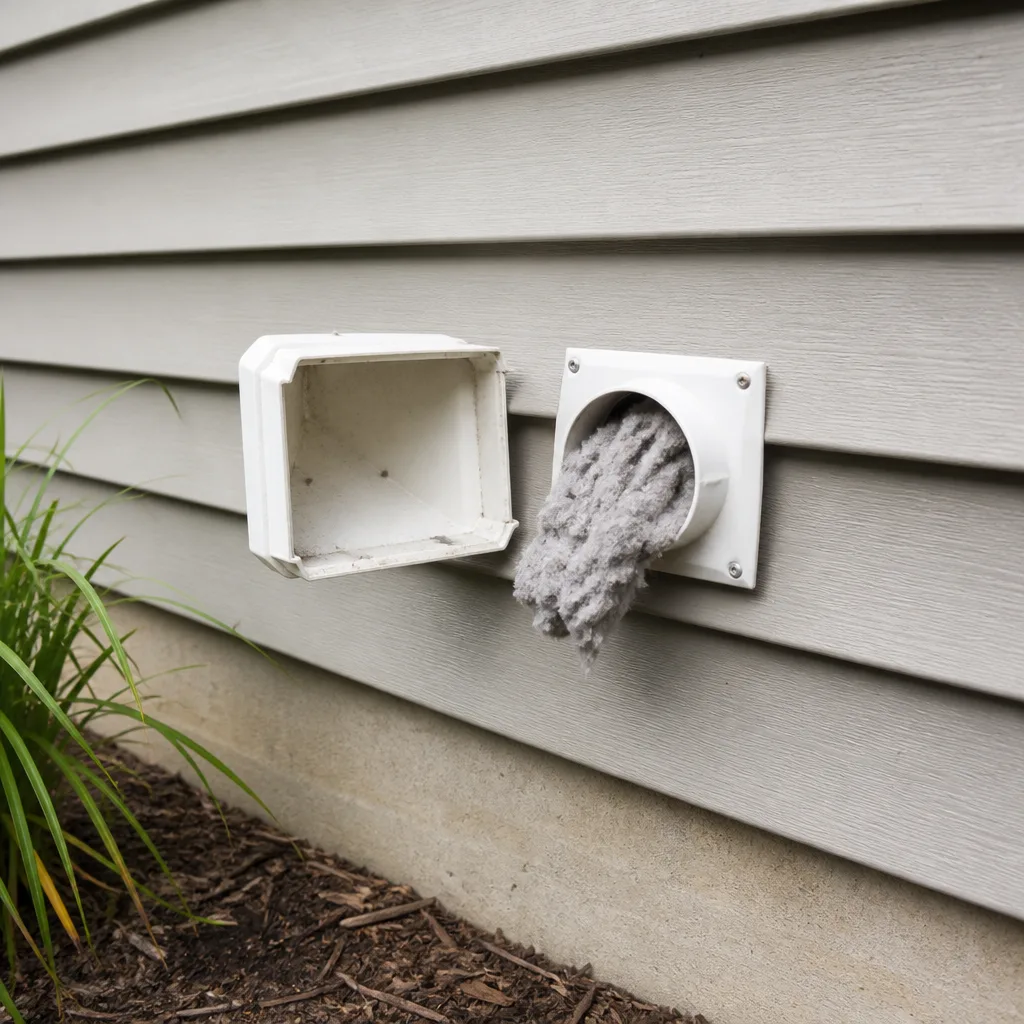 Dryer vent cleaning
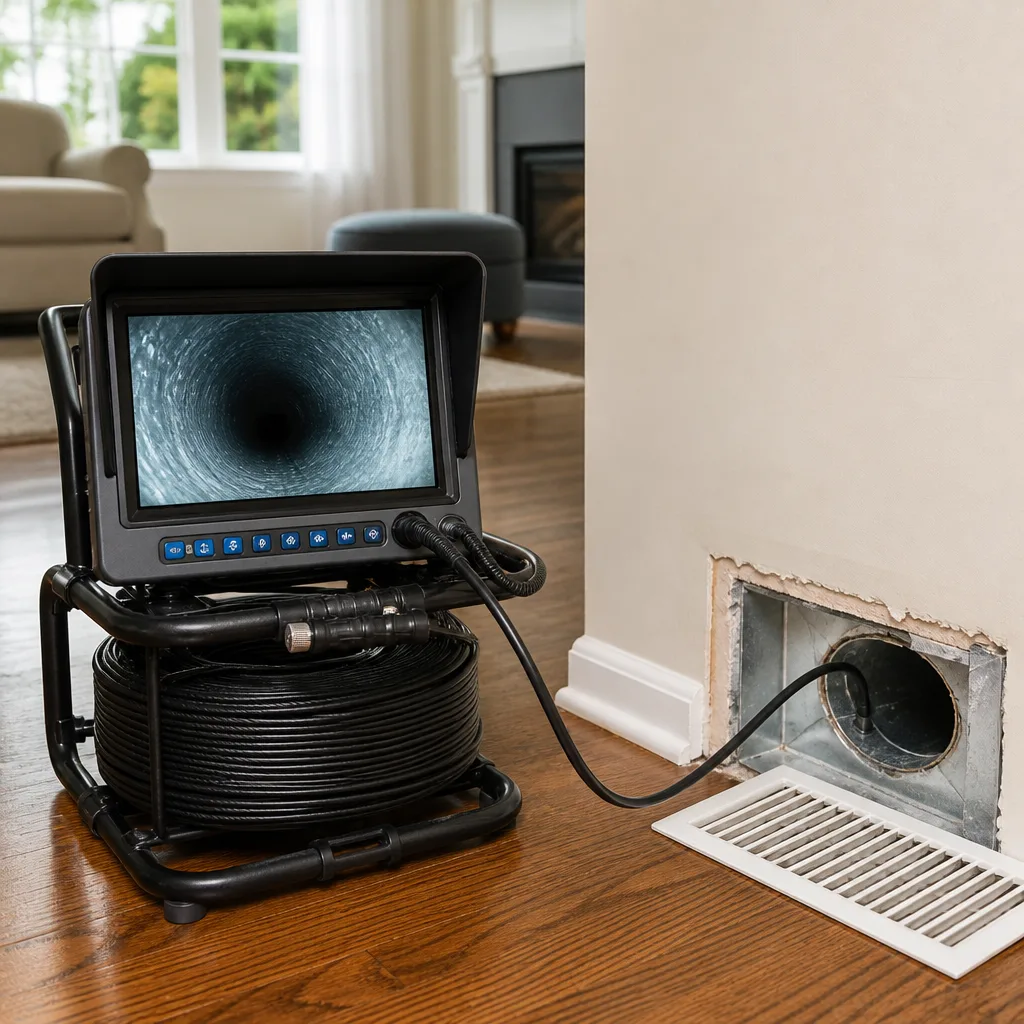 Camera inspection
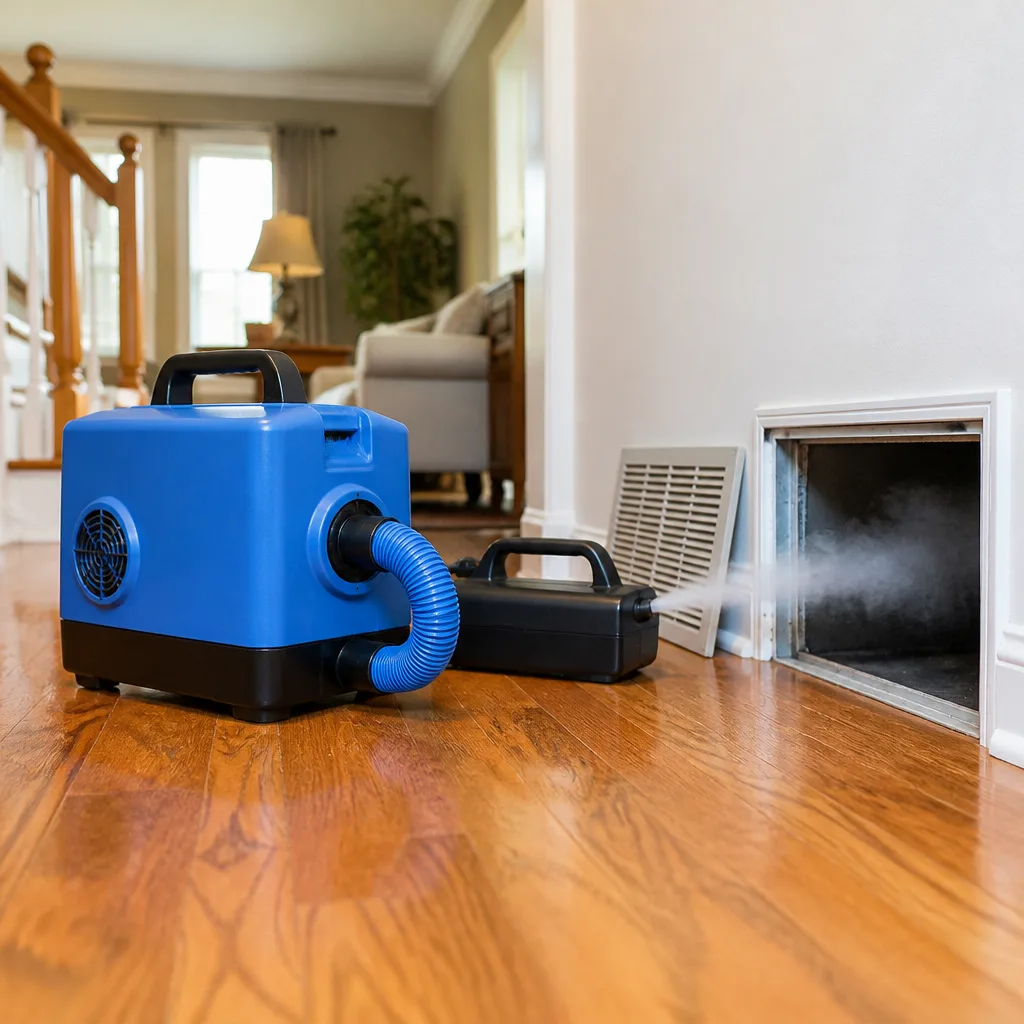 Sanitizing & deodorizing
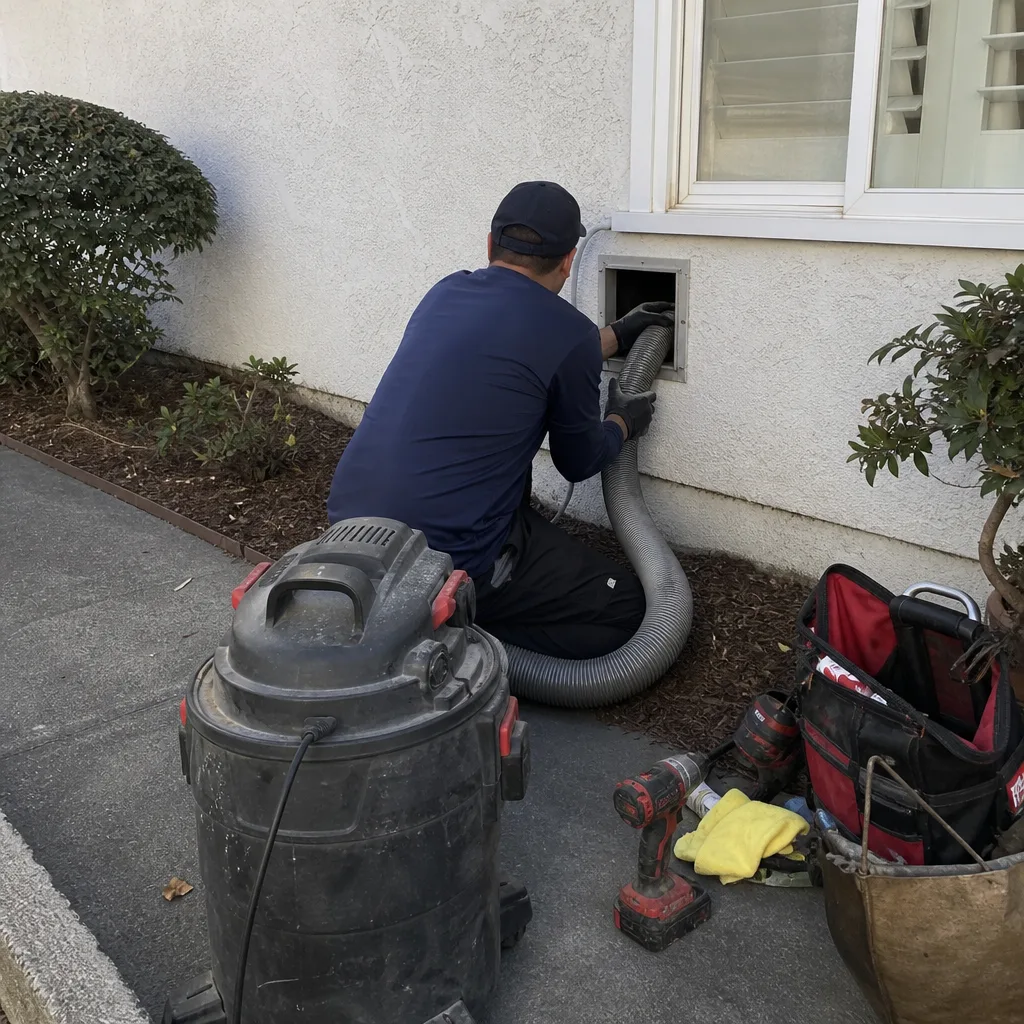
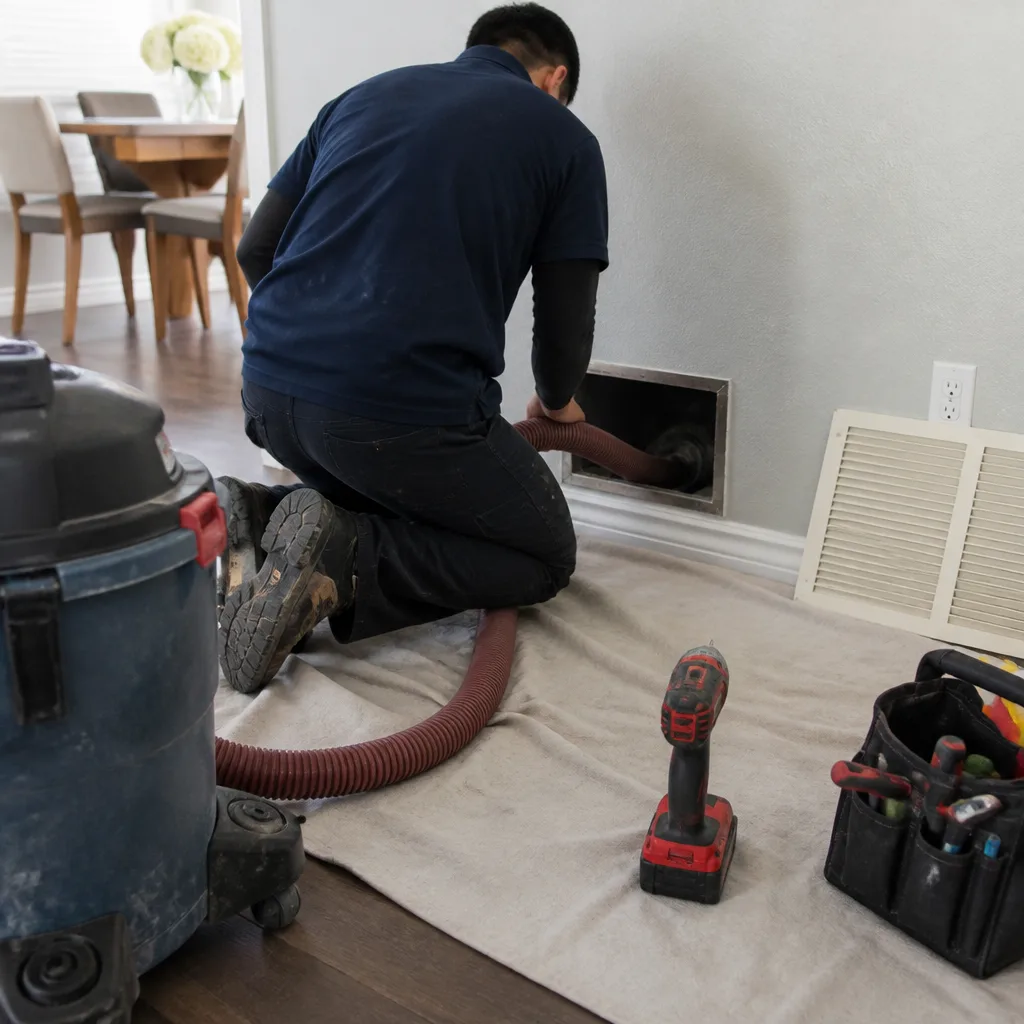
Whole-system duct and dryer vent check with before-and-after photos - you see exactly what came out of your vents
That "$99 whole-house special" is a bait ad - the real number appears once they are in your hallway, or the "clean" is a shop-vac at the register. We photograph the inside of your ducts before and after instead.
Air Duct Cleaning Warning Signs: A Torrance Homeowner’s Reference Guide
If you’re waiting until you can see dust blowing out of your vents to call a duct cleaner, you’ve already been breathing contaminated air for months. The visible-debris stage is late-stage, not early-stage. By the time particles are large enough to see with the naked eye, they’ve been circulating through your living room, your bedroom, and your lungs for quite a while. This guide-along with The Complete Guide to Air Duct Cleaning in Torrance-trains you to read the subtler signals your Torrance home sends long before that point. We’ll cover what most generic “warning signs” articles miss: how June Gloom moisture creates specific duct problems, why your nose can detect mold before your eyes can, and how a $12 infrared thermometer can reveal blockages you’d otherwise never know existed.
Quick Answer
The earliest air duct warning signs in Torrance homes are musty odors that appear when the AC cycles on after the marine layer rolls in, uneven room-to-room temperatures during summer months, and dark streaking at supply registers that returns within days of wiping it away. These three indicators show up months before visible dust blowout. If you notice any of them, schedule a professional Air Duct Cleaning inspection. Clean ducts aren’t a luxury in Torrance’s coastal climate; they’re the baseline for healthy indoor air.
Styles & brands we work with
Table of Contents
- The Smell Test Decoded: What Torrance’s Marine Layer Does to Ductwork
- Airflow Asymmetry: The $12 Infrared Thermometer Test
- Reading Your Supply Registers: Gray Dust vs. Bio-Film Contamination
- Health Signal Correlation: When Your Body Is the Detector
- Urgency Tiers: What Needs Immediate Response vs. Scheduled Cleaning
- Noise Symptoms: What Your Ductwork Shouldn’t Sound Like
- Torrance-Specific Factors: Construction Era, Climate, and Your Ductwork
- Moisture and Microbiological Growth: What the EPA Says and What We See
The Smell Test Decoded: What Torrance’s Marine Layer Does to Ductwork
The single most reliable early warning sign of duct contamination is also the one most homeowners dismiss: a musty, earthy, or slightly sour odor that appears specifically when the AC kicks on. This isn’t random. Your ductwork is a dark, sometimes humid environment. In Torrance, the marine layer that rolls in most evenings between May and August raises ambient humidity dramatically. When moist coastal air meets the cool surfaces inside your ductwork and on your evaporator coil, condensation forms. That moisture becomes a breeding ground for mold, mildew, and bacteria. Within weeks, microbial colonies establish themselves on the evaporator coil, in the flex duct lining, and along the interior walls of rigid metal ductwork.
Here’s the decode: if the smell is strongest in the first 30 seconds after the blower starts and fades as the system runs, you’re smelling biological growth on the coil or in the duct lining. The air movement disturbs the colonies, pushes volatile organic compounds into your living space, and then passes. If the smell is constant while the system runs, that points to contamination deeper in the duct runs themselves. Both scenarios warrant professional attention. The Environmental Protection Agency has long recognized that damp or contaminated HVAC components can contribute to indoor air quality problems. In Torrance’s specific climate pattern, that dampness is a near-constant from late spring through early fall.
We’ve walked into Torrance homes in neighborhoods like Seaside Ranchos and Walteria where homeowners had lived with that “AC smell” for months, assuming it was normal coastal humidity. It’s not. A properly sealed and clean duct system should not produce any odor when the blower activates. If yours does, that’s your nose doing its job. Listen to it.
Airflow Asymmetry: The $12 Infrared Thermometer Test
Here’s a counterintuitive fact: your ducts don’t usually clog all at once. They clog run by run. One branch line serving the back bedroom might accumulate 15 years of dust, pet dander, and construction debris while the line serving the living room stays mostly clear. The result is what we call airflow asymmetry: some rooms cool properly while others lag, even when the thermostat says everything is fine. Your thermostat only reads the temperature where it’s mounted. It can’t tell you that the southwest bedroom is running 8 degrees warmer than the hallway.
You can detect this in under 15 minutes with a $12 infrared thermometer from any hardware store. Here’s the step-by-step process:
- Set your thermostat to a set cooling temperature, around 72°F, and let the system run for 30 minutes.
- Walk through each room with the infrared thermometer and aim it at the center of the room, roughly chest height.
- Record the reading on a notepad or in your phone. Do this for every room, including hallways.
- Compare the temperature spread between rooms. A difference of 3°F or less is normal. A gap of 5°F or more strongly suggests reduced airflow to the warmer rooms.
- Check the supply registers in the warm rooms: hold a tissue or a single square of toilet paper up to the register while the system is running. It should flutter noticeably. If it hangs limp or barely moves, that register’s duct run is partially blocked.
Partially blocked duct runs in Torrance homes are often the result of years of accumulated dust binding with humidity into a dense mat that lines the interior of the duct. It doesn’t blow out as visible debris because it’s adhered to the duct walls. But it narrows the effective diameter of the duct and chokes airflow. The long-term cost of ignoring this: your AC system compensates by running longer and harder to hit the thermostat setpoint. That means higher utility bills and more wear on the compressor. In our experience across Torrance, a system with one or two significantly blocked runs typically uses 15 to 25 percent more energy to cool the home than the same system after a professional cleaning.
Reading Your Supply Registers: Gray Dust vs. Bio-Film Contamination
Pull out your phone’s flashlight and look closely at one of your supply registers, the ones where conditioned air blows into each room. Remove the register cover if it’s held by screws (most are) and inspect the first few inches of the duct opening. What you see there tells you more than any other single visual check.
A normal accumulation pattern is a uniform, light gray, powdery ring around the register opening. This is ordinary household dust: dead skin cells, fabric fibers, tiny soil particles. It wipes away with a damp cloth and takes weeks to slowly return. This is not a warning sign in itself, though if the layer is thick enough to see texture, you’re overdue for a cleaning.
Bio-film contamination looks entirely different. You’ll see dark brown, gray-black, or greenish streaking that follows the airflow pattern across the register face. It often has a slightly waxy or tacky feel, not dry and powdery. Here’s the key test: wipe it away thoroughly with a damp cloth and a mild cleaner. If it returns within 7 to 10 days in roughly the same pattern, you’re not looking at dust. You’re looking at biological growth feeding on moisture and organic material inside the ductwork. The visible streaking at the register is just the edge of a colony that extends further back into the duct run.
This pattern is more common in Torrance than in inland Southern California cities because of the sustained humidity, particularly in homes within a mile or two of the coast. The neighborhoods closest to the water, like Hollywood Riviera and the South Bay coastal belt, see this pattern most frequently. If you see dark streaking that returns quickly, don’t scrub it again and hope for the best. The source is inside the duct system, and that’s where the solution has to happen.
Health Signal Correlation: When Your Body Is the Detector
Your body sometimes flags duct contamination before you ever notice a smell or see a streak. The pattern to watch for is specific: allergy symptoms, morning congestion, sinus pressure, or respiratory irritation that are present at home but improve noticeably when you leave the house for the day or for a weekend. If you wake up congested on a Tuesday morning at home, feel better by noon after you’ve been at the office, and then feel symptoms creeping back in the evening after you return, that’s a strong correlation.
This pattern points to duct contamination over other indoor air quality causes for one simple reason: your duct system is the distribution network. If the source of irritants were a single water-damaged area, a pet, or a particular piece of furniture, you’d typically feel worse in one room or one part of the house. When the ducts are contaminated, every room that receives conditioned air becomes an exposure site. The HVAC system doesn’t just circulate air; it can actively dose every living space with whatever is growing or accumulating inside the ductwork.
The contaminants most commonly implicated in this pattern are mold spores, dust mite byproducts, and accumulated fine particulate that acts as an ongoing irritant. In Torrance, the extended high-humidity season means dust mites thrive in ductwork where moisture levels rise. Dust mites don’t need much: humidity above 50 percent and organic material to eat. Your duct system provides both. A professional air duct cleaning removes the food source and, when combined with proper humidity management, makes the system far less hospitable to dust mites going forward.
If you or a family member has a diagnosed respiratory condition like asthma or COPD, any of the warning signs in this guide should push you toward a professional assessment sooner rather than later. The standard for “clean enough” is different when someone in the home is already compromised. A free estimate and inspection costs nothing and gives you a clear picture of what you’re dealing with.
Urgency Tiers: What Needs Immediate Response vs. What Can Wait
Not every warning sign demands an emergency call. Here’s how to triage what you’re seeing in your Torrance home:
- Immediate response (call within 24 – 48 hours): Visible mold growth on the evaporator coil or inside visible duct surfaces; a musty odor that is present even when the AC is off; standing water in the ductwork or drip pan; dark streaking at multiple registers that returns within days of cleaning; symptoms in a family member with a diagnosed respiratory condition that correlate directly with time at home.
- Urgent but schedulable (within 1 – 2 weeks): Musty odor that only appears when the AC cycles on; airflow asymmetry of 5°F or more between rooms; thick gray dust accumulation at registers; increased dust settling on furniture within 48 hours of cleaning; allergy symptoms that improve away from home but no diagnosed respiratory condition in the household.
- Routine (schedule at your convenience): Light dust at registers typical of 3 – 5 years since last cleaning; no odors; even temperatures across rooms; no unexplained health symptoms. In Torrance’s climate, we recommend a professional cleaning every 3 to 5 years for most homes, and every 2 to 3 years for homes with pets, smokers, or recent construction.
Here’s a straightforward reality: none of the “urgent” tier items improve on their own. Mold doesn’t starve itself out of a duct system. Bio-film doesn’t spontaneously dry up and disappear. What these conditions do is compound. A small microbial colony this spring becomes a significant contamination problem by the end of summer because Torrance’s humidity profile gives it exactly what it needs to grow. The sooner you address the issue, the simpler and less expensive the solution tends to be.
Noise Symptoms: What Your Ductwork Shouldn’t Sound Like
Your ears can catch warning signs your eyes and nose miss. When the blower cycles on, listen for these specific sounds:
- A persistent rattling that changes with air pressure: This often indicates a loose connection in the ductwork, which is an air leakage point. Leaky ducts don’t just waste conditioned air; they pull unfiltered attic or crawlspace air into the system, which is often the source of that odd, not-quite-dusty, not-quite-musty smell.
- A whistling or high-pitched air leak sound at registers or grilles: This signals excess static pressure in the system, usually from partially blocked ducts forcing air through narrower openings than the system was designed for. It’s the same principle as pinching a garden hose.
- A dull thud when the blower starts or stops: This often indicates ductwork that has come loose from its mounting and is flexing under air pressure changes. In Torrance homes built in the 1960s and 1970s, original duct hangers and straps have had 50-plus years to fatigue.
- A rhythmic ticking that speeds up and slows down with the system: This can be debris caught in the blower wheel itself, which often means the wheel is out of balance and wearing its bearings prematurely.
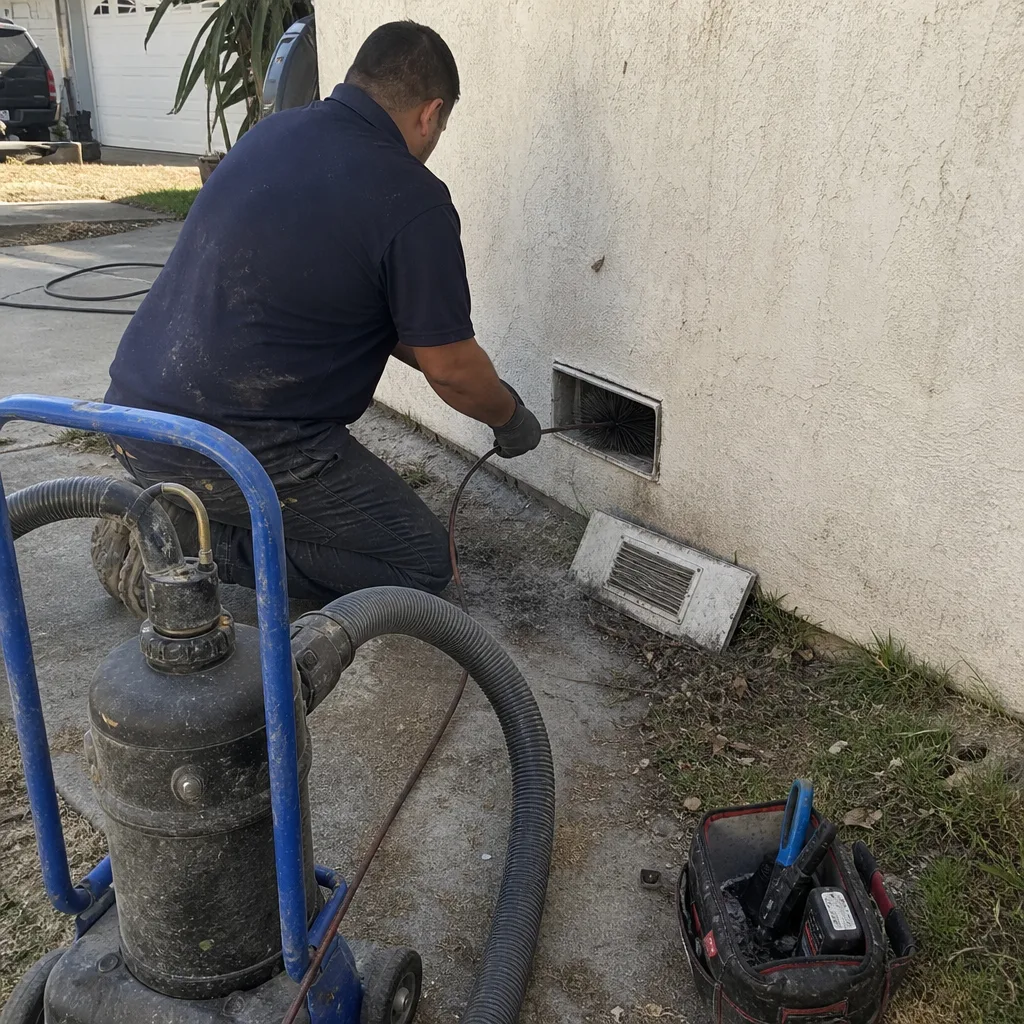
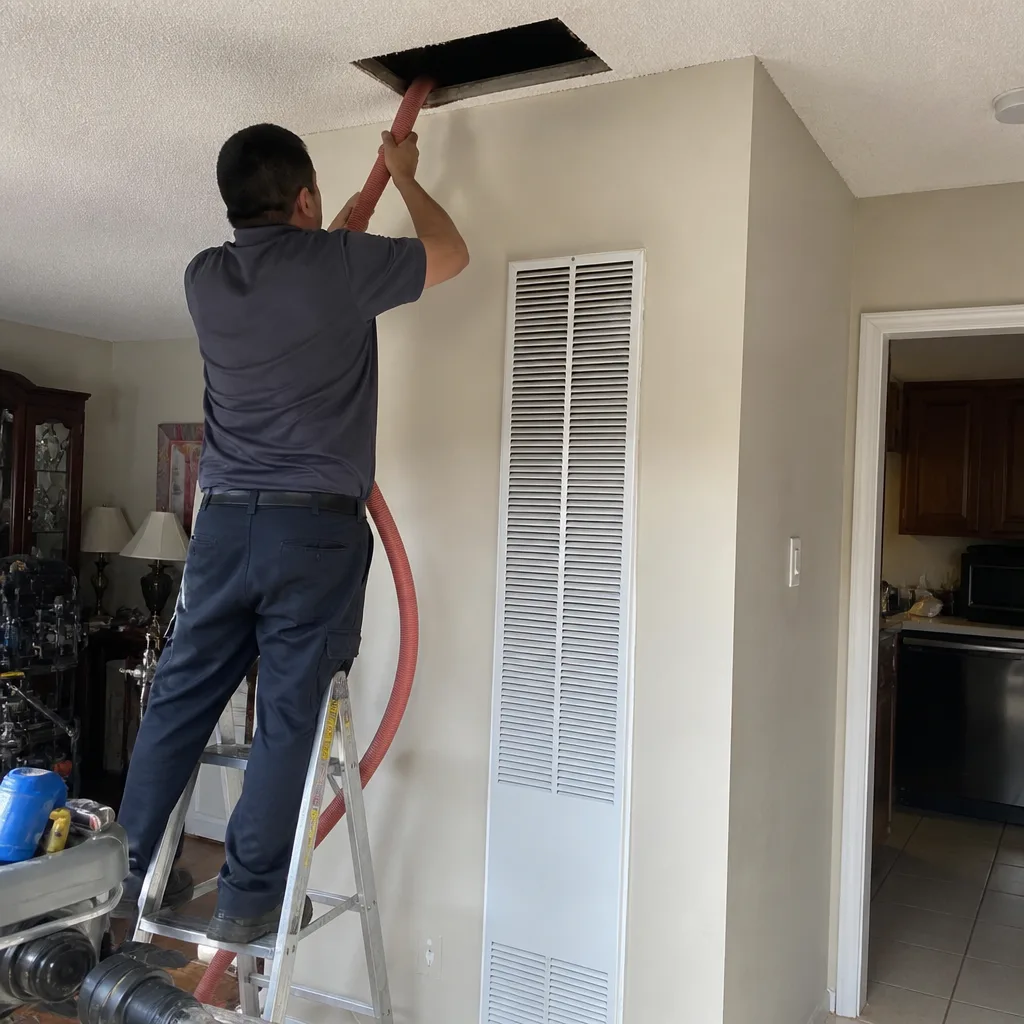
Most of these noise symptoms are accessible and diagnosable by a professional with the right equipment. Our technicians run Rotobrush brush systems for cleaning and Nikro HEPA-rated vacuums for extraction, but before any cleaning happens, a visual inspection locates loose connections, blockages, and wear points that may need repair. A clean duct that’s still leaking at a joint is a clean duct that’s still pulling attic dust into your bedroom.
Torrance-Specific Factors: Construction Era, Climate, and Your Ductwork
Torrance’s housing stock spans a wide range: post-war tract homes from the 1950s, mid-century builds through the 1970s, and newer construction in developments around Del Amo and the eastern hills. Each era has its characteristic duct problems.
Homes built before 1980 often have original rigid metal ductwork with old insulation wrap. That insulation, typically fiberglass, degrades over time and can shed fibers into the air stream if the inner lining fails. These homes also predate modern building codes that mandate duct sealing. If no one has resealed the ductwork since construction, air leakage of 20 to 30 percent is common. That leaked air doesn’t just vanish. In many Torrance homes, it pressurizes the attic or crawlspace and re-enters the living space through gaps in the ceiling, bringing whatever is up there along with it.
Newer homes have different issues. Construction debris in ductwork is surprisingly common in homes built in the last 10 to 15 years. Drywall dust, sawdust, paint overspray, and even fast-food wrappers from construction crews end up in the duct runs because sealing and cleaning before occupancy is not universally enforced. Builders’ warranty coverage rarely extends to duct cleanliness. A professional air duct cleaning in Torrance shortly after move-in is one of the most overlooked steps for new construction, and one of the most valuable.
Torrance’s climate is the common denominator across all construction eras. The marine layer isn’t just a weather pattern; it’s a design parameter. Coastal humidity interacts with every duct system, old or new, and the homes that see the fewest problems are the ones whose owners treat duct maintenance as a scheduled item, not an emergency response. For ongoing education, browse our more guides & resources.
Moisture and Microbiological Growth: What the EPA Says and What We See
The Environmental Protection Agency’s official guidance on air duct cleaning has been clear for years: if you have moisture or visible mold in your ductwork, clean it. The EPA doesn’t recommend duct cleaning as a routine annual service for everyone. It recommends cleaning when conditions warrant it: moisture, mold, infestation, or debris buildup. We agree with that guidance, and in Torrance’s humidity profile, the “conditions warrant it” threshold arrives sooner than it does in drier inland cities.
Microbiological growth in ductwork follows a predictable pattern. It starts on surfaces that cycle through wet and dry conditions: the evaporator coil, the drip pan, the first few feet of flex duct leaving the air handler. Those surfaces get cold enough to condense moisture from the air and warm enough again to create a growth cycle. From there, spores and fragments distribute through the system. A Nikro HEPA vacuum system captures this material during cleaning rather than allowing it to become airborne in your living space. If you’re comparing cleaning providers, ask specifically about extraction method. Negative-pressure extraction, meaning the loosened debris goes straight into the vacuum, not back into your living room, is the standard you want.
Homes with whole-home filtration from brands like Honeywell or Aprilaire have an advantage in particulate control, but even the best filter can’t stop microbial growth at the source. Filtration handles what’s in the air. Cleaning handles what’s adhered to the surfaces. Torrance homeowners with Aprilaire or Honeywell systems commonly ask us whether filtration makes duct cleaning unnecessary. The short answer is no. A high-efficiency filter captures more particles before they enter the ductwork, but it does nothing for the film that accumulates over years on the interior surfaces, and nothing for moisture-driven growth on the coil.
Common Mistakes to Avoid
- Waiting for visible debris before acting. If you can see particles blowing from your registers, the contamination is well advanced. The early warning signs are smell, temperature asymmetry, and streaking. Trust them.
- Assuming a new house has clean ducts. Construction debris in ducts is common in Torrance’s newer developments. A post-construction duct cleaning is a one-time expense that pays dividends in air quality from day one.
- Treating musty odor with air fresheners or scented filters. This masks the symptom while the biological source continues spreading. You’re not solving a problem; you’re adding fragrance to it.
- Ignoring room-to-room temperature differences as “normal.” A 5-degree spread is not a quirk. It’s a diagnostic clue pointing to a specific blocked or leaking duct run that can be located and fixed.
- Believing a high-efficiency filter makes duct cleaning unnecessary. Filters capture particles entering the system. They do nothing for material already adhering to duct interior surfaces or moisture-driven growth on the coil.
- Accepting vague pricing over the phone. Any reputable duct cleaning company should give you a written price before work begins. If a provider won’t commit to a number before arriving, that’s a red flag about how the invoice will look when the job is done.
- Neglecting dryer vent cleaning while focusing on air ducts. Lint-clogged dryer vents are both an efficiency problem and a fire hazard. If you’re doing a whole-home air quality overhaul, include the dryer vent in the scope. Our dryer vent cleaning in Torrance service addresses this often-overlooked component.
See the difference
 Before
 After
After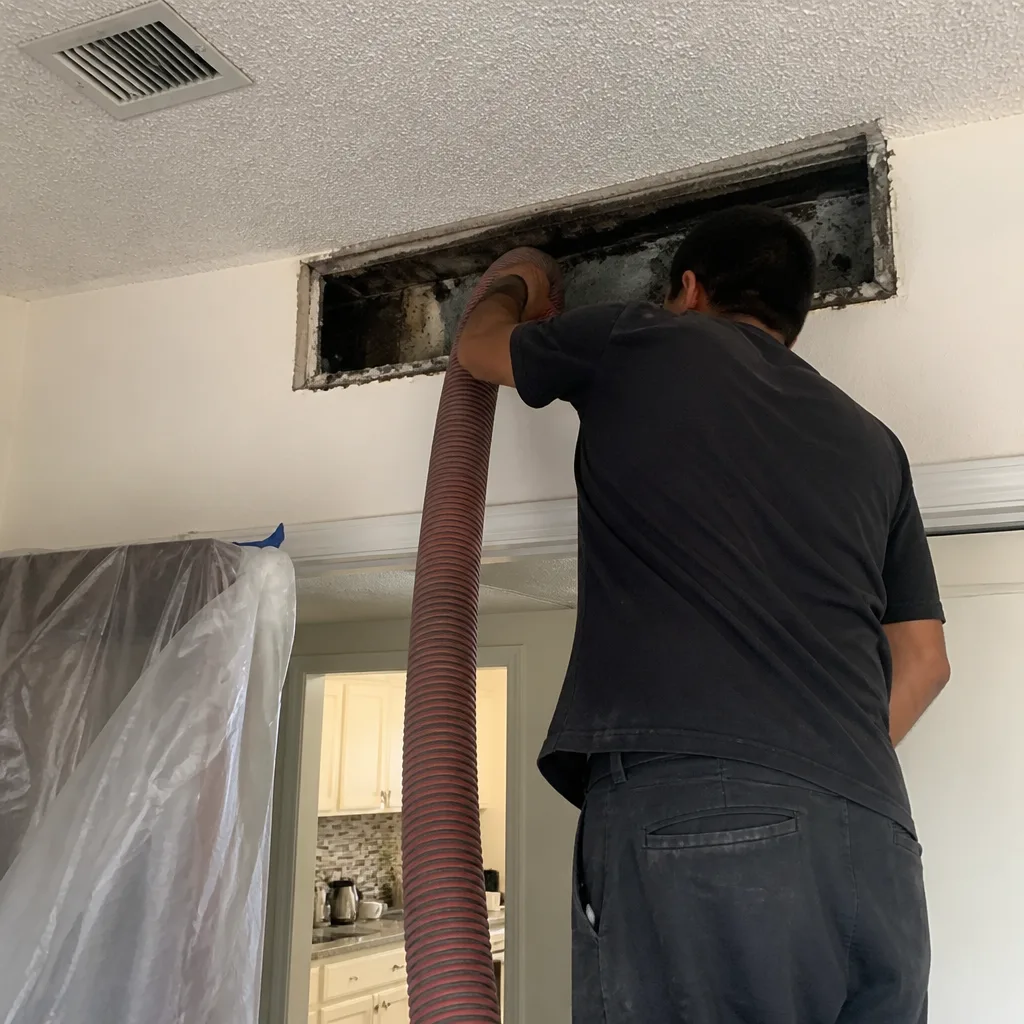 Before
 After
After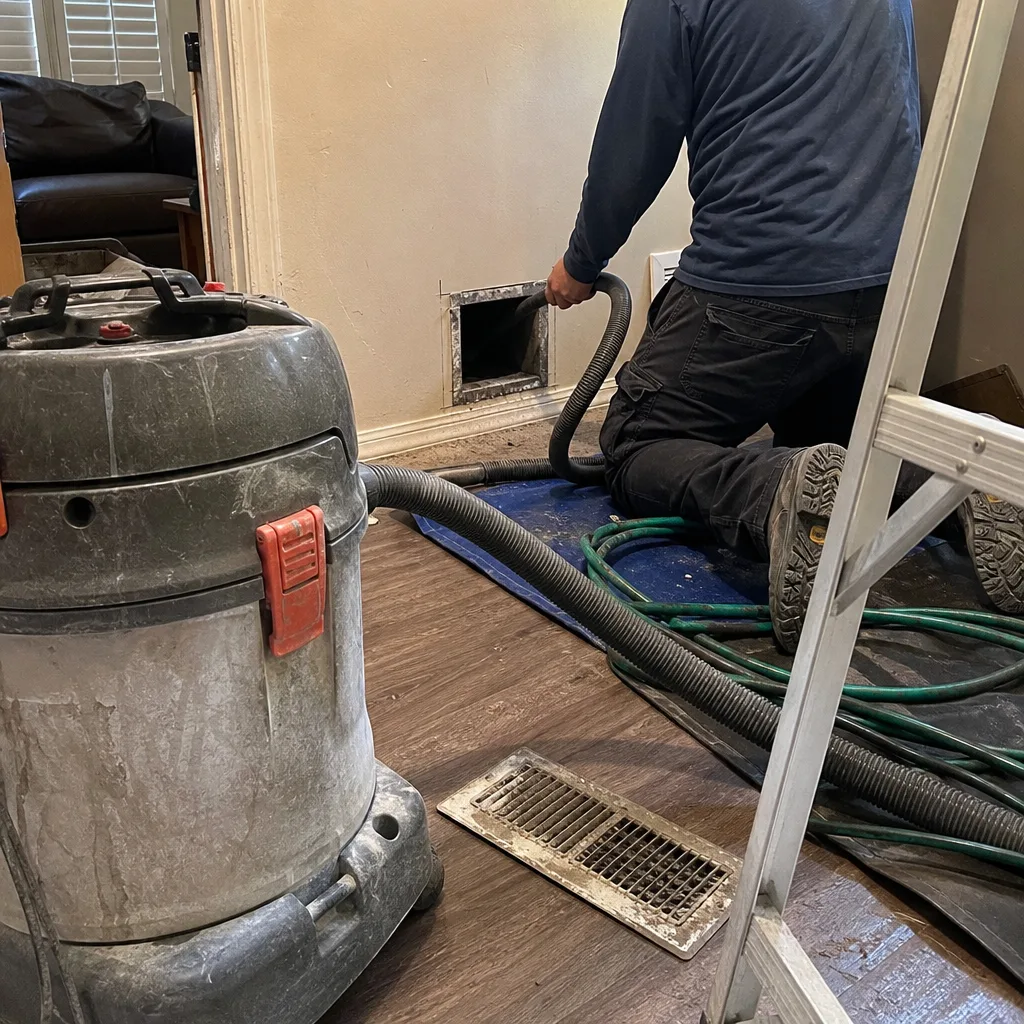 Before
 After
AfterWhen to Call a Professional
Some things in home maintenance are worth attempting yourself. Duct cleaning isn’t one of them. The system is enclosed, the contamination you’re trying to remove is often biological, and the tools that do the job properly, like Rotobrush rotary brush systems and Nikro HEPA vacuums, are professional-grade equipment, not rental-shop shop-vacs. A shop-vac attached to a register will loosen debris but won’t capture it effectively, and it certainly won’t handle mold, bio-film, or deep duct runs. If you’ve identified any of the warning signs in this guide, the next step is a professional inspection. Cardinal Air Duct Torrance offers free estimates in Torrance, and you’ll get a written price before any work begins. Call (424) 488-0361 to schedule.
Every Cardinal Air Duct Torrance visit operates on The Relay Standard: a live trackable arrival time, background-checked uniformed technicians whose names you’ll know before they knock, before-and-after photo proof of the work, and a digital invoice you can pay by link. If the work isn’t right within 365 days, we return and make it right. That’s the 365-Day Done Right Promise, and it applies to every booking without exception.
Frequently Asked Questions
In Torrance’s coastal climate, most homes benefit from a professional air duct cleaning every 3 to 5 years. Homes with pets, smokers, recent construction, or family members with respiratory conditions should schedule every 2 to 3 years. The marine layer’s humidity accelerates biological growth, so Torrance homes typically need cleaning more often than identical homes in inland cities like Riverside or Bakersfield. If you’re not sure where your system stands, a professional inspection gives you a clear answer. Call (424) 488-0361 for a free estimate and we’ll assess your specific situation.
Dust is dry, powdery, and gray or tan; mold is often dark-streaked, slightly tacky to the touch, and returns quickly after you wipe it away. Dust accumulates passively from normal household activity. Mold requires moisture, which in Torrance comes primarily from condensation on the evaporator coil and in duct runs when the marine layer raises ambient humidity. If you see dark streaking that reappears within a week or two of cleaning your registers, that’s biological growth, not household dust, and it needs professional treatment.
If your symptoms are caused by dust, mold spores, or particulate accumulating in your duct system, then yes, a professional cleaning can produce noticeable improvement, often within days. The key variable is whether the ductwork is actually the source of your exposure. If your symptoms improve when you leave the house and worsen when you return, that’s a strong indicator. Our HVAC cleaning in Torrance service includes not just the ducts but the air handler, coil, and blower components where allergens concentrate.
Most standard air duct cleanings for a typical Torrance home run between $350 and $650, depending on the size of the home, the number of system units, and the level of contamination present. The final price is always provided in writing before any work begins, so there are no surprises at the door. Homes with extensive bio-film contamination or multiple HVAC systems will fall on the higher end. Call (424) 488-0361 for a specific quote based on your home’s square footage and system configuration.
Very low quotes usually reflect a different scope of work: a register-level vacuum job rather than a full system cleaning with brush agitation and negative-pressure extraction. Some national franchise models advertise a low base price and then upsell aggressively once the technician is in the home. A reputable provider quotes the whole job upfront and stands by that number. At Cardinal Air Duct Torrance, the written price you approve before work starts is the price on your invoice. No per-vent add-ons, no surprise line items.
You should receive photo documentation. At Cardinal Air Duct Torrance, before-and-after photos are part of every job through The Relay Standard. You’ll see what the interior of your ducts looked like before cleaning, and what they look like after. If a company refuses to show you photos of your own ductwork, that’s an answer in itself.
The Bottom Line
Your Torrance home’s ductwork is an environment, not just a set of pipes. It responds to the coastal humidity, the marine layer, the age of your construction, and the way you use your HVAC system. The warning signs that matter most, the ones that show up early, are the subtle ones: a smell when the AC cycles, a room that never quite cools, a dark streak that returns to the register. None of these fix themselves, and in Torrance’s climate, they compound. The fix, when you’re ready, is straightforward. A professional inspection, a written price, and a cleaning that’s documented from start to finish. Call (424) 488-0361 and get a clear picture of what your ducts look like right now. For more on what we do, visit the Cardinal Air Duct Torrance home page.
Written by Omar Haddad, Owner at Cardinal Air Duct Torrance, serving Torrance since 2005.